19 February 2016

Interview: Eddie Robson


Interview by Matt Michael

Eddie Robson is a writer of science fiction and comedy best known for his radio and audio work, particularly that related to his contributions to Doctor Who and its spin-off series. He has also written a number of fiction and non-fiction books including last year's novel Tomorrow Never Knows.

> What are you working on at the moment? 

I've been working on another episode of the CBeebies show Sarah & Duck, I'm writing a new Young Adult novel which isn't sci-fi or fantasy for a change, I'm writing a screenplay and pitching lots of stuff to TV and radio. It's been a quiet start to the year so I'm putting as many projects into motion as I can and hoping some of them come off.

> I’ve read a blog where you talk about having the urge to write from being 12 or 13. Can you remember what particularly inspired you? And what has kept you writing for the last 25 years?

I think it was just a task in English at school which went particularly well - I wrote a story about the First World War, all very My First Story About Real Human Suffering - and my teacher got me to read it out and said "When Edward is a famous writer you'll all be able to say you knew him" which of course didn't endear me to my classmates at all, but I remember thinking yes, that IS what I want to do.

And it's still what I want to do, so that keeps me going. I love doing it - yes some days it's a grind, but I actually do enjoy the process, it's not some necessary evil I have to go through to attain the state of Having Written. That said, fear of failure drives me a lot. That's how I get all my spec stuff done. And I always feel like I haven't achieved much, really, and hope the best is ahead of me.

> In the same interview you mention you saw yourself more as a ‘drama’ writer than a ‘comedy’ writer. What’s the distinction between them?

Jokes. A comedy has to be funny, and I often find it hard to develop new comedy ideas because it's hard to tell if a character or situation will be funny until you've written it, whereas in a drama you can tell whether it has a chance of working by sketching it out. That's what I find, anyway. It's possibly just the way I think that causes those problems for me: I can't start from character, it never works. I start from a scene, or a situation, or a high concept, and then work out who I see in it. Which I think is better suited to drama. But I do love writing funny lines.

> Some of your earliest credits are on Big Finish's Bernice Summerfield range, and you stuck with Benny even after you were stacking up Doctor Who writing credits. What is it about her that keeps you keen?

I've always found her easy to identify with. Her insecurities ring very true, and you can give her funny lines all day long. Plus, her job generates stories very well. I like stories about long-dead things returning.

> You went on to produce the Benny range in the late 2000s. How did the experience of production compare to writing? Would you ever be tempted to make the switch on a permanent basis, say to become a BBC Radio producer?

No. It'd take me away from writing, and I'm too old to make that switch anyway - most BBC producers have been doing it since their 20s, and I'm 37 now. The tiny experience of producing Bernice isn't preparation for what's expected there. I'm glad I did it, because I appreciate the difficulty of managing even a very small production, but I have no ambitions to move into that area permanently.

> Most people will associate you with scriptwriting, particularly of [BBC Radio 4 sitcom] Welcome to Our Village, Please Invade Carefully. However, you’ve also written or co-written several factual books and a lot of short stories. How easy is it to switch between those different styles of writing?

I don't find it that hard. Thing is, you imagine that when you're writing professionally you'll be able to focus on one project until it's finished, but that never happens. I'm always doing several different things. Sometimes those will all be scripts, sometimes some will be prose, some will be non-fiction. I find it helpful to switch between things, it keeps you fresh. Writing is never really easy, and if it is it's probably a sign it's going badly and you just haven't noticed... but switching between projects, I don't find particularly more difficult than switching from reading a book to watching TV.

> One of my favourite non-fiction Doctor Who books is Who’s Next, which is a kind of Discontinuity Guide for Generation Y. I particularly love its unwillingness to toe any kind of critical line, including the ‘new’ 1990s fan consensus of Good and Bad Stories. What ‘sacred cows’ did you enjoy slaughtering?

I tended not to cover those ones, but I'm glad we put the boot into The Brain Of Morbius a bit, which I don't think is really that good. Planet Of Evil, too. That season is held in high regard but has some terrible wobbles. We weren't that kind to season five, either, especially the beloved Fury From The Deep. I wish I'd been harsher on The Ice Warriors, which is really dreadful.

> In 2005 you wrote your first Doctor Who audio, Memory Lane. You’ve got 20-odd years of Doctor Who fandom, plus a whole load of critical opinions in your head from writing Who’s Next – did any of that feed in to the play?

It can't not feed in, but I'm really not sure how. I know I like Doctor Who best when it's a bit abstract and weird - my favourites are things like Enlightenment and The Mind Robber - and that definitely fed into Memory Lane. Imagery is important in Doctor Who, and that doesn't change on audio, you just approach it differently.

> You went on to write another half-dozen Paul McGann audios. Were you more interested in the Eighth Doctor than the others?

Not especially more than the others, it's just that when Memory Lane worked OK, they got me back in for more. I'm told Paul liked it, which helped. And then they started doing the BBC7 series, so there was suddenly a need for more material.

> A lot of writers have talked about picking over the TV Movie for ‘clues’ on his character. What preparation did you do? How much did your knowledge of eight years of Eighth Doctor books influence how you approached him?

They did influence me a bit, in how they reacted against the Seventh Doctor being so Machiavellian. Their Eighth Doctor was more spontaneous, and I ran with that.

> The Eighth Doctor and Lucie plays are still, in my mind, the single best range Big Finish has done: the first range that really took on the lessons of the revived TV series. You played a huge part in that, writing two of the four ‘season finales’, and introducing Tamsin. What are your views on the series now? What are you particularly pleased by?

Thanks, I'm glad you liked them. I do think they worked well. They made absolutely the right casting choice - at that point, Sheridan was still largely known for Two Pints Of Lager And A Packet Of Crisps, and though she was brilliant in that, she had a lot more in her, as we've all seen since. I saw her play Hedda Gabler at the Old Vic and she was amazing. She can do anything, and that's very valuable in Doctor Who, where the tone can shift very quickly. And I love the character. She's Alan Barnes' creation, but I was pleased to contribute some of the details. I came up with her surname! She was always fun to write, and became more so after we heard Sheridan's performance.

> I think Situation Vacant is a perfect story: one of the most brilliant ways to introduce a companion. How much did you know about Tamsin before you started writing it, and how much developed during the writing of the play?

A lot was worked out in advance, and of course what we see in the play is not what she's really like, it's a front she's putting up for the interview. The brief was quite specific, though it was left up to me to work out how the Doctor got involved in it all! In fact, the best bit that developed in the writing was the really capable hotel receptionist, who lurks around looking like ideal companion material, then doesn't join in the end...

> You haven’t written for McGann since. Is that a conscious decision? Now you’ve seen where he’s heading, in The Night of the Doctor, how might you approach the character today?

It's not a conscious decision - BF ask me to pitch for the slots, so they'll offer a TARDIS team and I'll come up with something. Now, it's interesting - we know where he's going, and the Time War is looming. Paul plays him brilliantly as a man standing against an unstoppable tide, trying to help but not really get involved. I really like that aspect of him.

> More recently, you’ve also written several Davison plays including The Secret History. I think it has one of the great Doctor Who scenes, where the villain tempts the Doctor to save a man’s life with anachronistic drugs. How does writing for Davison differ from writing for McGann? Would that scene have played out differently? And how might you do it for Colin? Or David Warner’s Unbound Doctor?

I'm not sure to what extent I write them differently. The Doctor doesn't change that much, I think. Peter's Doctor is more questioning, Paul's is perhaps more flippant - but both would have the same moral sense, ultimately. That was the challenge of The Secret History, really - find something Hartnell's Doctor would do differently!

> I also remember you having a slight obsession with The Beatles, which must have played into Fanfare for the Common Men a fun job. You’ve also taken that interest into your first novel, Tomorrow Never Knows. I’m reading it at the moment, and even the first scene, with the talking trolley, made me laugh out loud. Going back to your old distinction between ‘comedy’ and ’drama’ writing, I feel that your plays and books are a blend of both. Do you now feel like you’ve squared that circle?

I think they've always overlapped. I was very influenced by dramas in the '90s that were funny, and sitcoms that didn't just hit the reset button every week. I always try to put humour in things. I suppose I divide these things because it's just easier to come up with a decent drama idea and then put some jokes in it, than it is to prove to someone that the thing you're pitching will definitely be funny. But it all overlaps. And it's always overlapped in Doctor Who. It's known for being scary and it's known for being funny. You need a bit of both.

Thanks to Eddie for his time. You can follow him on Twitter here.

17 February 2016

Matt Michael's Top Ten Top Tens

As you probably know, today is the birthday of the editor of this very site, Matthew Michael. To mark the occasion, we're counting down his ten best Top Ten lists.

10. Top Ten 2000s Doctor Who Stories

Michael's rundown of his ten favourite noughties Who stories sadly missed out the classic Boom Town, which is why it's at the bottom of this list. An otherwise enjoyable list ruined. 7/10.


9. Top Ten Paperclip Manufacturers

After seeing off big hitters like WHSmith and Tesco, this list - one of Michael's more popular - ended with a result no-one saw coming. 7/10.


8. Top Ten British Train Operators

It wasn't entirely clear who took the number one spot in this countdown, but it didn't take Sherlock to tell who came bottom of the list. Above average; 4/10.


7. Top Ten 2010s Doctor Who Stories

One of the more niche lists in this list, Michael was determined to ruffle feathers with this one. 6/10.


6. Top Ten 1980s Doctor Who Stories

Who can forget the time when a decent list was spoiled by the omission of the best story of the 1980s, The Ultimate Adventure? Disappointing. 8/10.


5. Top Ten 1970s Doctor Who Stories

As we pass halfway, we reach one of Michael's most recent lists. More of a filler instalment. 7/10.


4. Top Ten Months

One of the best-received lists in living memory, the outcome was what we all suspected. 7.5/10 nonetheless.


3. Top Ten Knitted Tea Cosies

After dismissing the rainbow cosy as 'infantile', Michael concluded with a somewhat controversial choice. 5.5/10.


2. Top Ten CD Running Times

A very important deciding factor for a CD review, this gave a fascinating insight into Michael's analysis technique. A classic. 9/10.


1. Top Ten 1960s Doctor Who Stories

The typo only makes this one better. A true classic in the history of top ten lists, an undisputed masterpiece. 6/10.

Happy birthday Matt! Let's hope there are many more lists to come yet.

29 January 2016

Kroagnon Awards 2016: Day Five - Big Finish


Welcome to the Kroagnon Awards 2016! All this week, we've been announcing all our favourite things of 2015, ranging from the broad to the niche. As well as being voted on by editors Dave, Matt and Tom, several categories have been decided by you, our readers, and industry experts.


2015 saw the release of the ninth and tenth series of Jago & Litefoot, the extremely popular Doctor Who spin-off which sees Christopher Benjamin and Trevor Baxter resuming parts they first played in 1977's The Talons of Weng-Chiang. The first of last year's boxsets saw the investigators of infernal incidents on a cruise while the second set up events that will continue in series eleven and twelve, due out this year. This is one of Big Finish's most-loved ranges, and 2015 was a bumper year, even by its own standards, making a worthy winner of our Best Series award. We were also big fans of Dark Shadows' output last year.


Our single Best Story of 2015 is Doctor Who: Damaged Goods, which was adapted by Jonathan Morris from Russell T Davies' 1996 novel of the same name. This was a perfect example of casting, writing and post-production coming together to create a flawless piece of audio drama. Damaged Goods is, by turns, funny, scary and intriguing - often all at once. Above all, it's utterly captivating and one of the finest things Big Finish have ever released. Hooray indeed.


The Doctor Who main range has long been a popular one with customers, and 2015 was as busy a year as any. Our favourite of the thirteen offerings was The Entropy Plague, written by Jonathan Morris, which saw Nyssa leave the TARDIS as she was sealed in E-Space. Also nominated were We Are the Daleks (also by Morris) and The Secret History (written by Eddie Robson). 


Paul McGann is named our Best Lead Actor of 2015 for his role as the Eighth Doctor. Last year saw the Dark Eyes arc, which had been running since 2012, conclude and the first of four Doom Coalition boxsets released. McGann is never less than excellent, constantly bringing fresh energy and new qualities to a part he's been playing twenty years - and very regularly since 2000. Also nominated was Alexander Vlahos who plays the title character in The Confessions of Dorian Gray.


Graeme Garden once again reprised his role as interfering Time Lord The Monk in Doctor Who story The Secret History last spring, to a rapturous reception. He first took on the role opposite Paul McGann in 2010 but fitted perfectly into this Eddie Robson-penned Peter Davison story. Maureen O'Brien and Peter Purves also starred in a tale which saw the Monk meddling in the Doctor's personal timeline to take his place. Garden brought his usual air of calm superiority, coupled with excellent comic timing, earning the accolade of Best Supporting Actor.


Our Best Writer of 2015 is Jonathan Morris. It's hard to fault Jonny as a writer, especially when he writes so many stories and manages to maintain such a high standard. Last year alone, products released that he wrote include the finale to Vienna (a spin-off which he created), The Entropy Plague, an adaptation of Russell T Davies' Damaged Goods, two episodes of Jago & Litefoot, The Cloisters of Terror, and an episode of Survivors. Hats off to Jonny as we look forward to much more from him over the coming months. Also nominated was David Llewellyn, who had a brilliant 2015 with Big Finish.


Bloodlust - a Dark Shadows special - was one of the best-received series of last year (see below). With countless actors involved, recording and co-ordinating the entire project was no mean feat and so it's only right that David Darlington and Ursula Burton be named our Best Directors of 2015. Even leaving logistics aside, Bloodlust was a masterpiece of direction and the end product is a great credit to all those involved. This autumn's Bloodline looks to be just as complicated and we wish the pair the best of luck! Scott Handcock was also nominated for his efforts across several ranges.


Howard Carter contributed to numerous series and stories last year but it's for Damaged Goods that he wins Best Sound and Music of 2015. His talents perfectly matched this electric story, and his post-production work really brought it to life. One of our particular favourites was his new theme tune, which we hope will be used again with the release of Original Sin later this year.


Lee Binding has long been admired as an artist by this site, so we were glad to see him contribute all the cover artwork for Big Finish's new Torchwood range. The images were all intricate, strong and visually appealing but none more so than that of Fall to Earth, the series' second story. The use of lighting and composition in Binding's work is unparalleled, making this award an easy decision. Also nominated was anything by Tom Webster (although that doesn't narrow it down much).


The Best Value product Big Finish released last year was, in our opinion, You Are the Doctor and Other Stories. All four of these half-hour adventures for the Seventh Doctor and Ace were very well received by listeners, and given that they're available to download for just £12.99 (or on CD for £14.99) - which also includes bonus behind the scenes material - makes this a very good value purchase. Both of the novel adaptations boxsets also featured high on our shortlist.


As already mentioned, Bloodlust was an immediate hit with Big Finish's audience. Our awards reflect that as you lot voted it your favourite new Big Finish range of 2015. The twice-weekly format was so popular that 2016's Bloodline looks set to replicate it. Judging by the talent behind the series, no doubt its popularity will also be replicated - look out for a large Dark Shadows presence in next January's awards.


Although it's already been released, this category was decided before 2015 was out. The Prisoner has been one of Big Finish's most hotly-anticipated series of recent years, and has already lived up to the considerable hype. We're also looking forward to the fifth and final series of The Confessions of Dorian Gray.

That's it for this year's awards! Thank you to everyone who's contributed and helped make them happen - we've certainly enjoyed ourselves. If you have anything to say about any of our choices, leave a comment on one of our posts, or if you'd like to write for the site you can email us here.

28 January 2016

Kroagnon Awards 2016: Day Four - Doctor Who


Welcome to the Kroagnon Awards 2016! All this week, we're announcing all our favourite things of 2015, ranging from the broad to the niche. As well as being voted on by editors Dave, Matt and Tom, several categories have been decided by you, our readers, and industry experts.


The third episode of 2015's Doctor Who series was our favourite. Under the Lake was written by Toby Whithouse, directed by Daniel O'Hara and saw the Doctor and Clara arrive in a base haunted by ghosts at the bottom of a lake. This was a perfect synergy of the talents of contributors in front and behind the camera, creating an atmospheric and involving tale. Next on our list was Heaven Sent. Read our review of Under the Lake here.


It's hard to believe 2015 was only Peter Capaldi's second year leading the series, such is the assured professionalism he brings to the role. This last year saw his Doctor mellow from the more antisocial incarnation of 2014 to a much more amiable figure. It's without a second thought that he is named our Best Actor of 2015, and we hope he remains in the role for many years yet.


Starring in Toby Whithouse's Under the Lake and Before the Flood, Sophie Stone's portrayal of Cass was extraordinary. Even leaving aside the fact that this was (somehow) the first time a deaf actor had played a deaf character in Doctor Who, Stone's performance was memorable and engaging and as such, Cass emerged as one of the most popular guest characters of 2015. 


Doctor Who in 2015 brought with it a host of exciting new and familiar villains but our favourite was the head of the Zygon revolution, Bonnie, as featured in The Zygon Invasion and The Zygon Inversion. Jenna Coleman gave a markedly different performance to her usual portrayal of Clara, showing the range of her abilities, getting to be much colder and steely than normal. It was an extremely strong performance that just managed to edge out Julian Bleach's return as Davros at the top of the season.


Toby Whithouse has been a regular contributor to Doctor Who in the Steven Moffat era, having written his first episode for the 2006 series. His two 2015 episodes - Under the Lake and Before the Flood - were another show of his innovative and exciting writing style, and it's for this two-parter that he is named our Best Writer of last year. We hope Whithouse continues to contribute to the series as he is one of its most reliably entertaining writers.


As in 2014, Rachel Talalay helmed the two closing episodes of Doctor Who's main run last year. Once again she did so in great style, bringing us the series' first single-hander and the return of Gallifrey in two feature-length episodes - Heaven Sent and Hell Bent. These were among the most cinematically-staged stories of 2015, and were even more popular than her début. Also nominated in this category was Hettie Macdonald, director of The Magician's Apprentice and The Witch's Familiar. 


As well as being a highly accomplished camera operator (including on productions such as Peter Harness' Jonathan Strange and Mr Norrell) Richard Stoddard is a rising star in the world of cinematography. This year he served as Director of Photography on four episodes of Doctor Who - Under the Lake, Before the Flood, The Girl Who Died and The Woman Who Lived. His work here speaks for itself and it's a credit to Stoddard that he win this award against the stiff competition of Suzie Lavelle and Mark Waters. More please.


Serving as Executive Producer on the 2015 episodes of Doctor Who, Brian Minchin is perhaps the least celebrated of the core production team, but deserves equal credit for what many are calling the best era the programme has ever enjoyed. It's certainly true that the series would be poorer without his influence and one of the most interesting things that hasn't been discussed in the wake of Chris Chibnall's appointment as Doctor Who's showrunner from 2018 is whether Minchin will be there alongside him. We can but hope.


You probably don't know Will Oswald's name but he has edited more episodes of Doctor Who since 2005 than anyone else. In fact, his closest rival, Mike Jones, has under half the number of episodes to his name that Oswald does. It's thanks to him that episodes such as last year's Under the Lake, Before the Flood, Zygon story and two-part series finale emerge so polished, exciting and professional. Being an editor is a thankless task to the wider viewing public, so we felt it only right that the accolade for Unsung Hero this year went to Will Oswald.


2015 was not short of Doctor Who merchandise, but our favourite was The Scientific Secrets of Doctor Who, written by Dr Marek Kukula and Simon Guerrier. This blended fact and fiction to create an interesting look at how the science of Doctor Who compares to what we know as fact. There's a few highly entertaining short stories in here from respected authors such as Una McCormack, David Llewellyn and Jonathan Morris. Read our original review here.


Our final category for today is the one you voted on. Heaven Sent was an instant hit with viewers, and so it's no surprise to reveal that you voted it your favourite episode of 2015. It was a tour de force for Peter Capaldi, who spend most of this dramatic hour alone, and showcased what the current production team is capable of.

Join us tomorrow for our final round of awards, this time focusing on
the productions of audio company Big Finish!

27 January 2016

Kroagnon Awards 2016: Day Three - Music and Books


Welcome to the Kroagnon Awards 2016! All this week, we'll be announcing all our favourite things of 2015, ranging from the broad to the niche. As well as being voted on by editors Dave, Matt and Tom, several categories have been decided by you, our readers, and industry experts. And Jonny Morris.


Kicking off today's round of awards is our Album of 2015, Froot by Marina and the Diamonds. The Welsh/Greek singer-songwriter's third album was her third UK top ten hit and yielded popular singles such as Happy, I'm A Ruin and Forget. Froot saw Marina move back towards the sound of The Family Jewels after the floor-filling sonics of Electra Heart, and was one of the most innovative and intelligently-crafted albums of the year. Adele's 25 naturally followed shortly behind.


Although it was released at the tail-end of the year, Adele's Hello quickly ascended the charts and spearheaded an inevitable revival of her global fanbase. Now, a month into 2016, her onslaught of the music industry shows no signs of letting up, with her follow-up single When We Were Young released last Friday. Both tracks are taken from 25. Also nominated was Years & Years' hit King.


Jonny Morris writes: "I can’t claim to be up-to-date with the latest music scene. That’s not to say I don’t enjoy new music – I’ve starred Emotion by Carly Rae Jepsen on Spotify – but as I haven’t listened to Radio 1 since Mark and Lard split up, it only really comes to my attention via recommendations. So my nomination of my single of 2015 is a track which wasn’t even a single but the opening track of an album of old Elvis recordings given a Philharmonically Orchestral treatment. Now, I know what you might be thinking, I was thinking it too. But, giving it a chance, listening to the first song, I was amazed. It worked. It was the same song, but it just sounded bigger. As big as Elvis’ voice, you could say. It did that great thing of taking old music and making it sound new – of making the dead sound alive."

Jonny Morris is a writer, tweeter and father. Visit his blog here.


Following David Bowie's tragic demise on 10 January, there was a resurgence in sales of his music, but Lazarus, the final single to be released while he was alive, had already been met with a positive reception. It was clearly a popular track with you, our readers, too as you voted it your favourite single of 2015. You also nominated Little Mix's Black Magic.


2015 was a huge year for London-born Jess Glynne with four singles hitting the top ten, and three of those rising right to the top, meaning she has now sung on five number one songs in under two years. Last year also saw the release of her debut album, I Cry When I Laugh, which reached number one too. After a long few years of hard work, it was really rewarding to see it all pay off for her. Also nominated was Adele, who returned to the world of music with quite some force as the year drew to a close.


Barely anyone knows who Public Service Broadcasting are, which is a shame as they bring something different, if not chart-topping, to an increasingly monotonous industry. Their blend of archive audio with newly-composed scores is unique and often insightful. Their 2015 album The Race for Space concerned the 1960s USA/USSR pursuit of space flight and the lead single, Gagarin, is a highlight. Definitely one to check out if you haven't already.


This song is truly terrible. Perhaps even as bad as last year's 'winner', It's My Birthday by Will.I.Am and Cody Wise. Avoid at all costs.


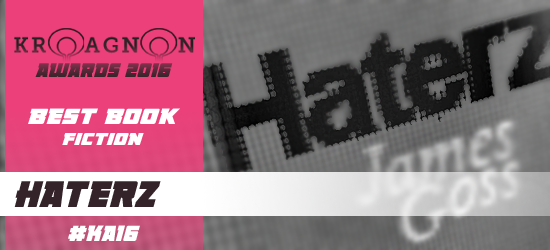
Concerning a man just trying to make the internet a nicer place, James Goss' Haterz is one of the most original books of recent years. Containing a startlingly accurate commentary on users of social media in 2015, Haterz is witty and intelligent in equal measure and thoroughly recommended. We also enjoyed Penguin's first two Books of British Short Story.


Of all the 101... or 1001... books, 1001 TV Series to Watch Before You Die, edited by BBC iPlayer maestro Paul Condon, is easily the most essential. It goes through television history from around the globe, right up to the present day, and features direct but intriguing entries from industry experts, including a few who will be familiar to readers of this site.


Una McCormack writes: "I strongly recommend Memory of Water by Emmi Itaranta. This is a vivid post-apocalyptic novel, set in a world of plastic seas and water shortages. It’s written in an intense and lyrical style: I found myself dreaming about it for weeks after. Incredible to think this is the author’s first novel."

Dr Una McCormack is a lecturer in Creative Writing at Anglia Ruskin University, and a New York Times-bestselling author. Visit her website here.

That's it for today! Come back tomorrow when all our awards will be about
the television adventures of Doctor Who!