Showing posts with label Interview. Show all posts

19 February 2016

Interview: Eddie Robson


Interview by Matt Michael

Eddie Robson is a writer of science fiction and comedy best known for his radio and audio work, particularly that related to his contributions to Doctor Who and its spin-off series. He has also written a number of fiction and non-fiction books including last year's novel Tomorrow Never Knows.

> What are you working on at the moment? 

I've been working on another episode of the CBeebies show Sarah & Duck, I'm writing a new Young Adult novel which isn't sci-fi or fantasy for a change, I'm writing a screenplay and pitching lots of stuff to TV and radio. It's been a quiet start to the year so I'm putting as many projects into motion as I can and hoping some of them come off.

> I’ve read a blog where you talk about having the urge to write from being 12 or 13. Can you remember what particularly inspired you? And what has kept you writing for the last 25 years?

I think it was just a task in English at school which went particularly well - I wrote a story about the First World War, all very My First Story About Real Human Suffering - and my teacher got me to read it out and said "When Edward is a famous writer you'll all be able to say you knew him" which of course didn't endear me to my classmates at all, but I remember thinking yes, that IS what I want to do.

And it's still what I want to do, so that keeps me going. I love doing it - yes some days it's a grind, but I actually do enjoy the process, it's not some necessary evil I have to go through to attain the state of Having Written. That said, fear of failure drives me a lot. That's how I get all my spec stuff done. And I always feel like I haven't achieved much, really, and hope the best is ahead of me.

> In the same interview you mention you saw yourself more as a ‘drama’ writer than a ‘comedy’ writer. What’s the distinction between them?

Jokes. A comedy has to be funny, and I often find it hard to develop new comedy ideas because it's hard to tell if a character or situation will be funny until you've written it, whereas in a drama you can tell whether it has a chance of working by sketching it out. That's what I find, anyway. It's possibly just the way I think that causes those problems for me: I can't start from character, it never works. I start from a scene, or a situation, or a high concept, and then work out who I see in it. Which I think is better suited to drama. But I do love writing funny lines.

> Some of your earliest credits are on Big Finish's Bernice Summerfield range, and you stuck with Benny even after you were stacking up Doctor Who writing credits. What is it about her that keeps you keen?

I've always found her easy to identify with. Her insecurities ring very true, and you can give her funny lines all day long. Plus, her job generates stories very well. I like stories about long-dead things returning.

> You went on to produce the Benny range in the late 2000s. How did the experience of production compare to writing? Would you ever be tempted to make the switch on a permanent basis, say to become a BBC Radio producer?

No. It'd take me away from writing, and I'm too old to make that switch anyway - most BBC producers have been doing it since their 20s, and I'm 37 now. The tiny experience of producing Bernice isn't preparation for what's expected there. I'm glad I did it, because I appreciate the difficulty of managing even a very small production, but I have no ambitions to move into that area permanently.

> Most people will associate you with scriptwriting, particularly of [BBC Radio 4 sitcom] Welcome to Our Village, Please Invade Carefully. However, you’ve also written or co-written several factual books and a lot of short stories. How easy is it to switch between those different styles of writing?

I don't find it that hard. Thing is, you imagine that when you're writing professionally you'll be able to focus on one project until it's finished, but that never happens. I'm always doing several different things. Sometimes those will all be scripts, sometimes some will be prose, some will be non-fiction. I find it helpful to switch between things, it keeps you fresh. Writing is never really easy, and if it is it's probably a sign it's going badly and you just haven't noticed... but switching between projects, I don't find particularly more difficult than switching from reading a book to watching TV.

> One of my favourite non-fiction Doctor Who books is Who’s Next, which is a kind of Discontinuity Guide for Generation Y. I particularly love its unwillingness to toe any kind of critical line, including the ‘new’ 1990s fan consensus of Good and Bad Stories. What ‘sacred cows’ did you enjoy slaughtering?

I tended not to cover those ones, but I'm glad we put the boot into The Brain Of Morbius a bit, which I don't think is really that good. Planet Of Evil, too. That season is held in high regard but has some terrible wobbles. We weren't that kind to season five, either, especially the beloved Fury From The Deep. I wish I'd been harsher on The Ice Warriors, which is really dreadful.

> In 2005 you wrote your first Doctor Who audio, Memory Lane. You’ve got 20-odd years of Doctor Who fandom, plus a whole load of critical opinions in your head from writing Who’s Next – did any of that feed in to the play?

It can't not feed in, but I'm really not sure how. I know I like Doctor Who best when it's a bit abstract and weird - my favourites are things like Enlightenment and The Mind Robber - and that definitely fed into Memory Lane. Imagery is important in Doctor Who, and that doesn't change on audio, you just approach it differently.

> You went on to write another half-dozen Paul McGann audios. Were you more interested in the Eighth Doctor than the others?

Not especially more than the others, it's just that when Memory Lane worked OK, they got me back in for more. I'm told Paul liked it, which helped. And then they started doing the BBC7 series, so there was suddenly a need for more material.

> A lot of writers have talked about picking over the TV Movie for ‘clues’ on his character. What preparation did you do? How much did your knowledge of eight years of Eighth Doctor books influence how you approached him?

They did influence me a bit, in how they reacted against the Seventh Doctor being so Machiavellian. Their Eighth Doctor was more spontaneous, and I ran with that.

> The Eighth Doctor and Lucie plays are still, in my mind, the single best range Big Finish has done: the first range that really took on the lessons of the revived TV series. You played a huge part in that, writing two of the four ‘season finales’, and introducing Tamsin. What are your views on the series now? What are you particularly pleased by?

Thanks, I'm glad you liked them. I do think they worked well. They made absolutely the right casting choice - at that point, Sheridan was still largely known for Two Pints Of Lager And A Packet Of Crisps, and though she was brilliant in that, she had a lot more in her, as we've all seen since. I saw her play Hedda Gabler at the Old Vic and she was amazing. She can do anything, and that's very valuable in Doctor Who, where the tone can shift very quickly. And I love the character. She's Alan Barnes' creation, but I was pleased to contribute some of the details. I came up with her surname! She was always fun to write, and became more so after we heard Sheridan's performance.

> I think Situation Vacant is a perfect story: one of the most brilliant ways to introduce a companion. How much did you know about Tamsin before you started writing it, and how much developed during the writing of the play?

A lot was worked out in advance, and of course what we see in the play is not what she's really like, it's a front she's putting up for the interview. The brief was quite specific, though it was left up to me to work out how the Doctor got involved in it all! In fact, the best bit that developed in the writing was the really capable hotel receptionist, who lurks around looking like ideal companion material, then doesn't join in the end...

> You haven’t written for McGann since. Is that a conscious decision? Now you’ve seen where he’s heading, in The Night of the Doctor, how might you approach the character today?

It's not a conscious decision - BF ask me to pitch for the slots, so they'll offer a TARDIS team and I'll come up with something. Now, it's interesting - we know where he's going, and the Time War is looming. Paul plays him brilliantly as a man standing against an unstoppable tide, trying to help but not really get involved. I really like that aspect of him.

> More recently, you’ve also written several Davison plays including The Secret History. I think it has one of the great Doctor Who scenes, where the villain tempts the Doctor to save a man’s life with anachronistic drugs. How does writing for Davison differ from writing for McGann? Would that scene have played out differently? And how might you do it for Colin? Or David Warner’s Unbound Doctor?

I'm not sure to what extent I write them differently. The Doctor doesn't change that much, I think. Peter's Doctor is more questioning, Paul's is perhaps more flippant - but both would have the same moral sense, ultimately. That was the challenge of The Secret History, really - find something Hartnell's Doctor would do differently!

> I also remember you having a slight obsession with The Beatles, which must have played into Fanfare for the Common Men a fun job. You’ve also taken that interest into your first novel, Tomorrow Never Knows. I’m reading it at the moment, and even the first scene, with the talking trolley, made me laugh out loud. Going back to your old distinction between ‘comedy’ and ’drama’ writing, I feel that your plays and books are a blend of both. Do you now feel like you’ve squared that circle?

I think they've always overlapped. I was very influenced by dramas in the '90s that were funny, and sitcoms that didn't just hit the reset button every week. I always try to put humour in things. I suppose I divide these things because it's just easier to come up with a decent drama idea and then put some jokes in it, than it is to prove to someone that the thing you're pitching will definitely be funny. But it all overlaps. And it's always overlapped in Doctor Who. It's known for being scary and it's known for being funny. You need a bit of both.

Thanks to Eddie for his time. You can follow him on Twitter here.

17 September 2015

Jonny Morris Interview

“I was very wary, very conscious though that it shouldn’t just be Doctor Who vs Thatchos, that the point I was making wasn’t about Thatcher per se – it was about the world we live in today.”


I
t’s a Tuesday morning in late July. This means it’s mostly grey and dreary outside, but the fact that it’s the midst of the British summer also means for a few seconds at a time it is mind-bogglingly hot. I am in my bedroom. Jonathan Morris is not. Yet thanks to the power of the internet – that thing you’re using to read this very article – we’re about to do an interview.
                Jonny, as he’s known to most, is a prolific writer when it comes to Big Finish Productions’ audio output. His work for the company up to now has for the most part been on Doctor Who and a few of its spin-off series, but he’s also contributed to various other popular ranges including Survivors and Dark Shadows.

T
he most recent work of Morris’ released by Big Finish is the Sylvester McCoy and Bonnie Langford story We Are The Daleks, and it’s here we begin our discussion.
                In 2014, an article was published in Doctor Who Magazine written by Morris with the same name as part of an issue dedicated to the Daleks. The piece questioned and studied why they were the series’ most enduring villains, and essentially concluded it was because we – humans – are the Daleks. This philosophy is detectable in the seventh Doctor story, but Jonny says that the link between the story and the article isn’t as tangible as you might first think.
                “The article didn’t inspire any ideas for a story at all, but it got me thinking about the Daleks and how they work as monsters. What is it about them that’s scary? Several things, of course. For The Curse of Davros I wrote them as toddlers, locked in a tantrum state. With We Are The Daleks, it started because Alan [Barnes, script editor] asked for a Dalek story and I wanted to do something more like Power or Evil [both of the Daleks] – a story which shows the Daleks’ intelligence where it’s their morality – their immorality – that makes them frightening.
                “They have a lot of similarity to that blind, fanatical belief in the free market – that the poor and weak are feckless and lazy, and deserve to suffer. They totally buy into the whole idea that being able to crush lesser beings underfoot is in some way a good thing.”
                But as far as We Are The Daleks could be said to be a commentary on the state of Britain in the late eighties, it takes on a whole new meaning when considered in the context of current global events.
                “If the Daleks came along and offered cheap oil or cheap manufacturing,” Morris continues, “our politicians would go along with that – whatever party it was. They would. They’d have no choice. I mean, it happens today with how we deal with oppressive regimes in the Middle East. And look at China; these used to be the bad guys but now they’re business partners who we’re desperately trying to attract ‘investment’ from.”
                Morris states in the writer’s notes accompanying the story that it wasn’t intended to be any kind of political allegory. Yet on listening to We Are The Daleks, I was struck by the decidedly left-wing angle it seems to exhibit.
                “Well, it is a political allegory,” Morris says, “but it’s not party political. Labour, Lib Dem, Tory governments, they all end up making the same kind of compromises. But, yes, there was a bit of that kind of monetarist evangelism you had in the mid-eighties. This idea that [the incumbent Conservative government] had that their idea of how the world worked was true, in defiance of morality and the facts was quite a Dalek-y mind-set. And so I had fun with a few little nods to Thatcher and the whole ‘There’s no such thing as society’ notion.”
                Many viewers and listeners seek Doctor Who stories for the respite they offer from the numerous and seemingly endless troubles of the ‘real world’. Morris’ words about the troubles and machinations of modern society hit home harder than perhaps any previous story has. A lot of listeners will latch on to the political trappings of this story through the character of Celia Dunthorpe, who would seem to be an upfront Thatcher cipher.
                “It could’ve been subtler but I thought, for once, let’s not be subtle.” He says. “Let’s go big, bold and obvious. Do something different! If anything, Celia was based on that small band of right-wingers that made John Major’s life hell in the mid-nineties. I loved them, I thought they were hilarious. They should bring them back.”

T
his isn’t Morris’ first time writing for this particular Doctor/companion combination though. Flip-Flop, released in 2003, saw the pair entangled in a format-breaking adventure with the Slithergees. How different did Morris find writing for the seventh Doctor and Mel twelve years on?
                “Is it only twelve years?” he shudders. “I thought it was more like twenty. It feels more like twenty.
                “It was completely different. I took a totally different approach. You see, last time, I was very much enamoured and impressed by what Gareth [Roberts] and Clay[ton Hickman] had done with The One Doctor, so I wrote the seventh Doctor and Mel as a kind of pastiche of how they were written back in 1987, all that Pip ‘n’ Jane stuff where Mel comes out with these incredibly grammatical baroque sentences.
                “And so for Flip-Flop I was re-watching those stories – [Time and the] Rani, Paradise Towers, Delta [and the Bannermen], Dragonfire – and all of that was feeding into my script. I was very consciously writing in a ‘Season 24’ style. Whereas with We Are The Daleks, I ignored that stuff completely. I wrote Mel as though she was a character from the modern series, being played by Bonnie Langford, the actress she is now, not the TV personality she was back in 1987. I didn’t even watch any of the older stories. Some people say it recreates the era anyway – which is lovely – but it wasn’t something that happened consciously.”
                Flip-Flop is something of a controversial story if you dig deep enough on the internet. Most people focus on its primary selling point – that you can listen to the discs in either order and it makes sense – but a lot of people object quite heavily to the subtext on immigration.
                “Flip-Flop is weird,” Morris concedes. “It’s so long ago that it feels like it was written by a different person. Some people say it’s the best thing I’ve ever done but it’s not the story I’d write now.”
                He has commented before that the more controversial elements may have been the result of reading too much of the Daily Mail. Now though, Jonny refutes this.
                “Reading one page of the Daily Mail is reading too much Daily Mail. I don’t think I’ve ever read more than that. It wasn’t about my own views. Writing can sometimes be about that, it can sometimes be very personal, very autobiographical, but sometimes you can say the complete opposite of what you think. If anything, Flip-Flop was about taking the mickey out of a certain kind of head-patting patronising view of multiculturalism that you’d find in The Guardian – the ideas that ‘minorities’ are automatically oppressed and deserve special treatment. That’s what Flip-Flop really is – the invasion of the planet of Guardian readers.”
                So far, we’ve only discussed two of Morris’ nigh-on boundless sum of stories, but politics have played a big part in the basis of each. How much does he think his own view informs how he writes?
                “I don’t know,” he surmises. “I approach things from a certain moral perspective, and in the simplest terms that works out as rich boss bad, poor worker good. But what actually makes writing interesting is creating moral dilemmas where there are no easy answers. A lot of it is about where you draw the line. You’re always trying to create those sorts of situations, because that’s what drama is.”

S
witching tracks a little, I’m interested to know what else might inform Jonny’s work.
                “Two examples pop into my head,” he says when I ask if he’s ever been directly inspired by a piece of music. “A comic strip I wrote called Supernature [for Doctor Who Magazine] was inspired by an old seventies disco track of the same name which was later covered by Erasure, with all sorts of animal and jungle noises added. And I wrote a Jago & Litefoot story [The Age of Revolution] which was inspired by The Kinks’ Green Preservation Society, where the manifesto of the villains in that story is based on The Kinks’ in that song; the idea that we must all get back to Victorian values. I think The Kinks were taking the piss though. There must be others though. Stories come from anywhere; often it’s just an atmosphere or location.
                “I sometimes listen to music to get into the mood to write, if I find I need to get into an ‘I am a good writer! I am good at this! I can do this!’ mood, which can sometimes take hours. But while I’m writing, I’m in the zone, so any music would be a distraction. At the moment I’m listening to Jeff Wayne’s War of the Worlds far too much because I’ve only just got into it and I’m wondering why I didn’t have this when I was eight! I’d have loved it! They should do a Big Finish in that style.”
                As much as he enjoys his music though, Morris admits he doesn’t keep up with modern artists as much as he used to.
                “When you get to my age, you tend to accumulate people that you’ve followed through their careers, so for anyone new to grab your attention, they need to be very unusual and special. I’m painfully aware that a lot of the acts I think are current are actually from five or six years ago now, which is comparatively ancient.”
                I have to agree with Morris here, although his music taste isn’t a complete write-off as he’s a fan of Marina and the Diamonds, the clever chap.

I
n April of this year, an adaptation of Russell T Davies’ 1996 seventh Doctor novel Damaged Goods was released on two discs. Jonny had the job – the honour, as he puts it – of scripting the story.
                “I think it is very, very good. The whole package, everything – the sound design, the music. It’s very strong.” he continues. “I was quite surprised listening to it, how hard it was, how it didn’t pull punches. Sometimes listening to these things can be quite a passive experience, but Damaged Goods grabs you by the throat. You are gripped and it shows what can be done. That’s the standard we have to reach from now on. Sometimes with these things you’re worried about rocking the boat but, you know, you have to try to push it as far as you can go.”
                Did the process bear any similarities to adapting the Lost Stories Morris worked on – Philip Hinchcliffe’s The Valley of Death and Johnny Byrne’s The Guardians of Prophecy – a few years ago?
                “They were both similar in the sense that I was trying to capture the tone of a particular era, doing the whole ‘Tonight Matthew, I’m going to be…’ thing of trying to make my own voice as invisible as possible and write as Russell, or Johnny, or Philip. But I kind of try to make my own voice as invisible as possible anyway. I don’t want all the characters to sound like me, I’m boring.
                “And the other way they were all similar is that I was working from something that didn’t have a ninety-minute structure, so I had to find a way of taking an existing story and restructuring it as well as adapting it for the audio medium. It’s nuts and bolts stuff, but it’s stuff I enjoy and I think is one of the things I’m good at.
                “I don’t know if I’d like to do any more novel adaptations. It depends on the book, really. Damaged Goods was a book that, when it was announced, people said would be impossible to adapt. And it was a very difficult one to do, but that’s what made it exciting for me, the fact that it posed a huge challenge. So I’d only want to do ones of at least equal difficulty. Transit maybe.”
                The 1992 Ben Aaronovitch novel was divisive to say the least after its publication. It saw the Doctor land in a world of ‘hard’ science fiction, drugs, sex, violence and swearing. It is regarded by some as the archetypal Virgin New Adventure, the embodiment of all the associations which that label may bring.
                “I mean, it’d be lovely to do The Witch Hunters but really if anyone’s going to adapt that it should be [author] Steve Lyons. But generally speaking, my feeling is that I’m not going to top Damaged Goods - I should go out on a high.”
                How would Morris feel about his own 2000 novel Festival of Death being adapted for audio?
                “Well, to begin with, like with Flip-Flop, people sometimes say, ‘Jonny, Festival of Death was amazing, the best thing you’ve ever done!’ which is lovely but always leads me to think ‘Really? That was the first thing I did! So it’s been diminishing returns ever since?’. I’m initially reluctant to go back to a book which, if I did adapt it, would require so much work because there are parts of it which are quite a long way away from great. I’d rather adapt it that someone else but it’s a moot point really, because it’s not going to happen. The rights remain with BBC Books – I never bothered to take them back when it was out of print because there was always the possibility it might go back into print, which turned out to be the case. It’s out of my jurisdiction…”

W
ith only a couple of exceptions, thanks to latest DWM comic Spirits of the Jungle, Morris has now written for all the Doctors.
                “Well I haven’t done John Hurt yet,” he comments wryly. “How do I sleep at night? It would’ve been nice to have done a Companion Chronicle with the first Doctor. I listen with envy to the audios that Simon Guerrier did with Peter Purves! But I wouldn’t have written stories as good as those. I’m kind of happy that I did a little first Doctor bit in Tales from the Vault [the 2011 Companion Chronicle] and I’ve written first Doctor short stories, so I consider him ticked off the list.
                “Jac Rayner’s first Doctor audios are absolutely magical too. She and Simon do the first Doctor much better than I would. I’m happy to sit back and let them do the work and have fun of listening to it.”
                So far, it may seem that Morris has worked only on Doctor Who, and while to a large extent that’s true, he has also delved deep into the worlds of its associated series, most notably Jago & Litefoot, for which he’s written an impressive eight episodes.
                Jonny has previously detailed the discrepancies between the idealised Victorian society of Jago & Litefoot and the reality on his own blog. How do the inconsistencies sit with him?
                “It’s an interesting question,” he muses. “I think the smoke and Hansom cab world of J&L is very alluring, but the fact that it is always a pastiche of a pastiche, that it isn’t historically accurate, makes me uncomfortable. I think the Victorian era is much more varied and interesting than the impression you get from the fiction, which all tends to be set during the 1890s, which is as far away from Dickens’ Victorian London as we are from the 1960s. So it’s always a bit weird when you get bits of Dickens’ stuff in J&L, because part of me wants to go ‘That’s wrong, that’s bad history.’ But on the other hand, it’s all Victorian, isn’t it?
                “My feeling is that you should always be as historically accurate as possible, except where it gets in the way of the story, in which case you are allowed to deliberately get things wrong. There is no excuse for unintentionally getting your history wrong!”
                The series is prescribed to a certain degree by script editor Justin Richards, who has creative control of the series.
                “He’d write up these three hundred-word synopses of what would happen in a story, which were incredibly helpful in terms of knowing what bits of the story arc would happen in which episode, where you were going and where you had been, and so on. But these would only have about a sentence on what the actual story was, he’d always leave lots of room for that. So for The Spirit Trap I think the synopsis said ‘Jago and Litefoot investigate séances run by’ whatever the character’s name was. The rest would be up to me.
                “I much prefer doing standalone stuff, which is why I’ve tended to be asked to write the first ones from each set because they tend to be the ones with the least ‘arc’ stuff. My next one [The Year of the Bat], even though it’s not the first in the box, is pretty much standalone.”

T
o move to another spin-off series from the good Doctor’s adventures, would Morris be interested in writing an audio drama for Bernice Summerfield? After commissioning him for last year’s Mask of Tragedy, it could be said that James Goss, the series’ current producer, owes him one.
                “Yes, he does. James Goss owes me big time! Goss, your name is on the list. The list of people who owe me.
                “I’m afraid I feel a bit of a fraud in that I’ve never listened to the Benny adventures. I’m sure they’re great – how could they not be with all the amazing people who have written them and been in them? – but I really think the people who write them should be people who are fans of Benny, who would jump at the chance and get a lot out of it, rather than me.”
                One of Big Finish’s other series that Jonny has written for, with no connection to Doctor Who, is Survivors. The third series, featuring his second episode, Cabin Fever, is out later this year.
                “I think it’s darker,” he says of the upcoming set. “I read the scripts for Series Two, and it’s darker than Series One. I’m not sure how much darker it can get but they seem to be trying to find out! But I don’t think Survivors would lend itself to a comedy episode – or would it? Maybe the Scorchies [James Goss’ musical alien puppet creations] could turn up. But my story for Series Three is, again, me going off and doing my own thing. It’s mostly a standalone story, a flashback to the early days of the outbreak.”

As our time, which Jonny has very graciously extended, draws to a close, I have just one more topic I would like to cover. Although he’s done a lot of work as a script editor as well as writing – including Simon Guerrier’s very first piece official Doctor Who story The Switching – Morris has never crossed into the territory of Scott Handcock and former flatmate Joe Lidster in the form of also directing and producing.
                “I wouldn’t do it like Joe,” he laughs, “I’d be good at it. Ho ho. No, well.
                “I have no interest in producing at all. It’s all organisation, booking studios, sending out contracts, and so on. And although I could do that, it’s the sort of admin work I’ve been running away from all my life.
                “I’d love to direct. I’ve sat in the studio enough times to see how it’s done, to know which button on the desk you should press before you swear, and it would, frankly, be great to have more control over my own work. Not just through the recording but through the post-production process too. At the moment it gets taken away from you, and that’s cool, we’re all grown-ups – it’s not ‘My baby! My baby! What have you done to my beautiful baby?!” – but you know, just as television writers get to sit in the edit suite and offer suggestions on how things could be improved, it would be lovely to have that chance with Big Finish stuff. And they wouldn’t have to pay me!”
                So if you’re reading this, David Richardson and co, you know where to look for some fresh blood. And if anything does come of this Jonny, I expect the standard 25% fee in the post.

T
hroughout my time chatting with Jonny, the impression I’ve got of him is absolutely the one I had hoped for. Jonny is endearingly humble and self-deprecating but takes an admirable and justifiable pride in his work. His stories are treasured by the masses. Even if they don’t know his name, Jonny’s work has brought countless readers and listeners great pleasure. Here’s hoping the Morris magic continues to spread for many years to come.
                Happy birthday Jonny.


Who is the most famous Doctor Who-related person in your contacts?
I’m lucky enough to count Steven Moffat and Russell T Davies amongst my friends. I don’t know any of the Doctor Whos personally but I think those two are kind of top, aren’t they?

Is the McGann/Eccleston regeneration still your favourite, as it was in 2012?
Um, no. If I had to choose favourites – sorry Colin – I’d say the Davison to Colin one is the most dramatic, and the Eccleston to Tennant one is the one that moved me the most emotionally. It was a really tear-jerking goodbye.

When are the Slithergees coming back?
When the world is ready for them.

Was Adric really your childhood hero?
Possibly, a bit.

What was the last Doctor Who story you watched and what did you think of it?
Last of the Time Lords, which I thought was magnificent, hilarious, bold and clever. But it could probably have done with losing 5-10 minutes in the edit.

What is the most notable piece of Doctor Who merchandise you own?
Do books and CDs count as merchandise? I have the underpants. I have a pair of slippers with the McCoy logo. I don’t know. The thing I prize the most is a signed and dedicated copy of SynthespiansTM by Craig Hinton, bless him.

Any final words to close the interview?
5/10. An average romp.


Thanks very much to Jonny for his time. You can visit his excellent blog here.

02 March 2015

Interview: Joseph Lidster


Joseph Lidster has written scripts for theatre, radio and television, including episodes of Torchwood, The Sarah Jane Adventures, Wizards Vs. Aliens and Millie Inbetween. You can find him on Twitter here.


Good evening Joe. Thanks very much for agreeing to this.

No worries.

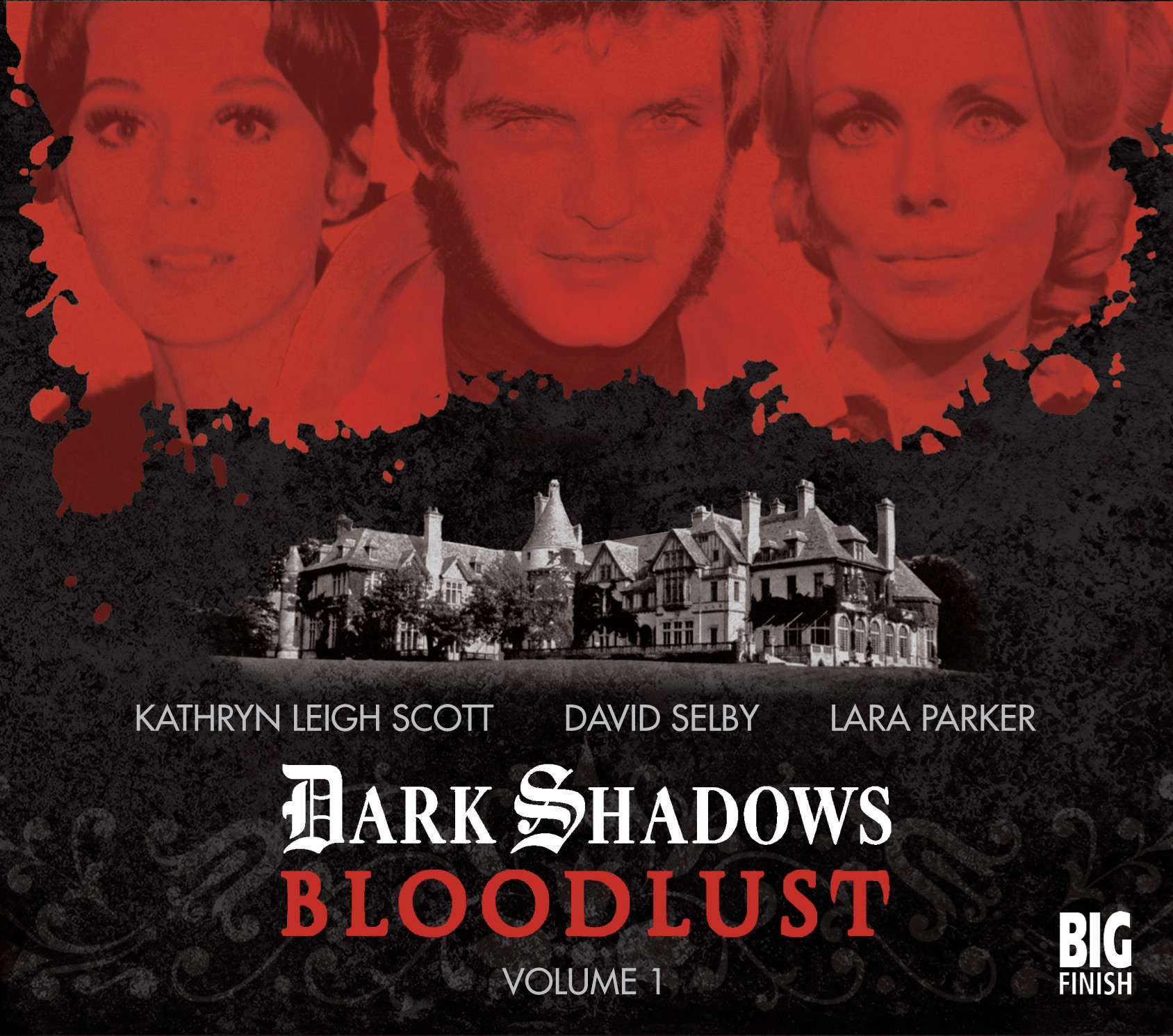
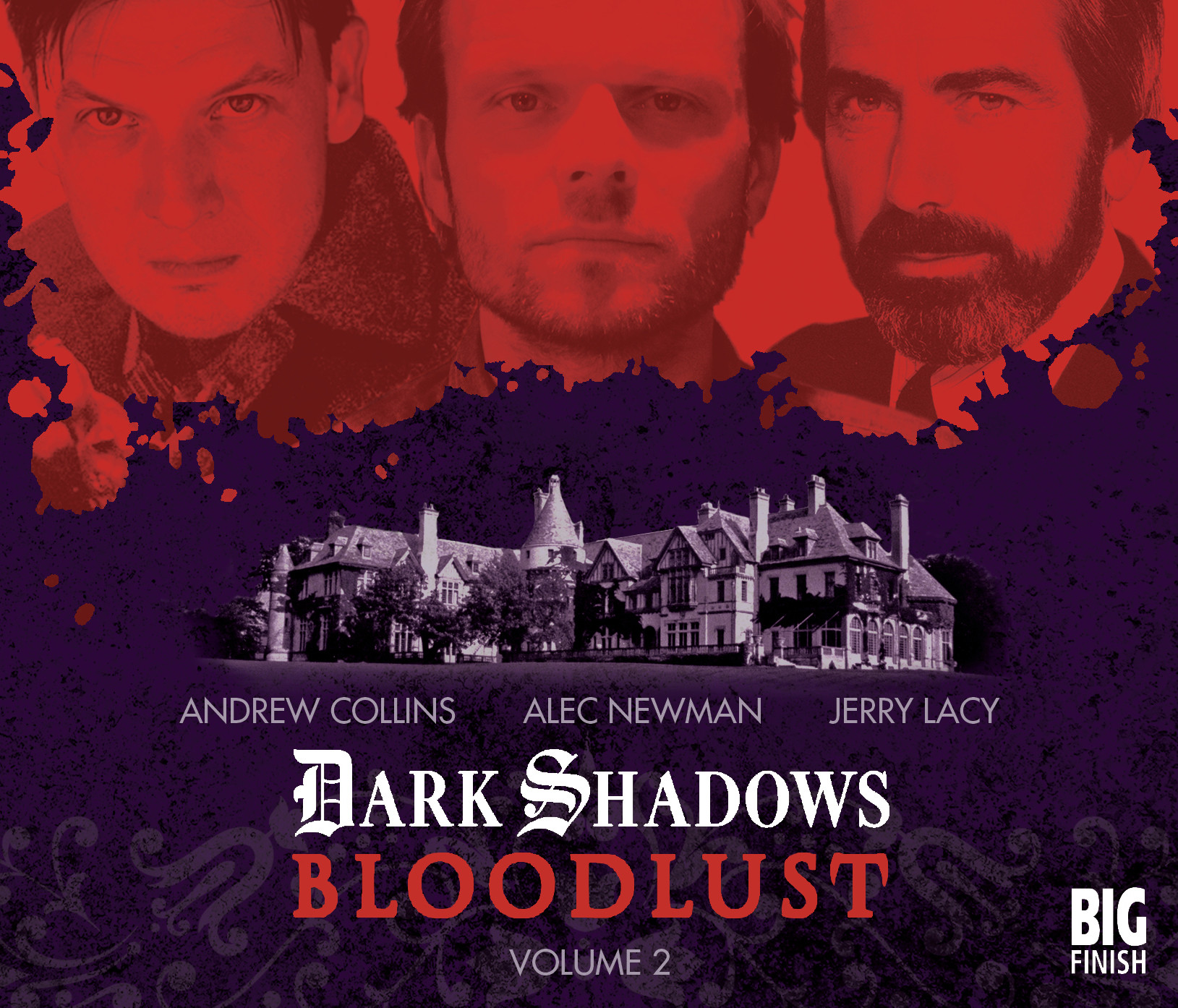
Dark Shadows: Bloodlust, the series you recently co-produced with David Darlington, has been met with great critical acclaim. 

We were hoping for a positive response purely because we'd put so much work into it. Also, I personally loved it. I loved the storyline, the scripts, the acting, the music, everything. So yeah, we were hoping for a good response but I don't think we were prepared for just how well it was received. We've been very happy over the last few weeks, that's for sure.

When did you first start putting it together?

Me and David started talking in July 2013, I think. We sent Big Finish our initial pitch document in August and then, when that was approved, we contacted Will [Howells] and Alan [Flanagan] and started discussing storylines.

And how did you come to decide on the writing team? Alan and Will had only written one Dark Shadows audio each prior to Bloodlust. Without wanting to detract from either of them, to an outsider they may not have seemed like the obvious choices.

Both of them had proven themselves to be a) fantastic writers and b) interested in the series. They'd both watched episodes and become actual fans of the show. Practically, though, an important thing was that we all lived in the same city. We knew that the writers needed to physically meet up to chat about ideas (and drink lots of wine). We could have discussed everything over email - and obviously once we started writing there were lots of email discussions - but nothing compares to having a group of writers in a room just batting ideas back and forth.


That makes sense, especially the wine! How did you go about devising and splitting up the plot? How much was known about each episode when it was assigned to its writer?

It was all very complicated! We discussed which existing characters we were using and devised our new characters. We then worked out the main storyline. The series was split into two blocks - episodes 1-6 and episodes 7-13 - and we worked out how the storylines would progress over 1-6 with a vague idea of where we were going for 7-13. We then worked out roughly what needed to happen in each episode. After that I wrote up a more detailed plan for each episode - basically giving each character/storyline a different colour and plotting them over the episodes. We then talked about whether we had any preferences as to which two in the first block we wanted to write. For example, I was very keen to write episode 5 as it had the vibe of one of those EastEnders episodes set at night - it's basically a few small combinations of people talking. Will was keen to do Episode 1 (which I was very grateful for as it was by far the hardest episode to write). When we got into the second half of the series, Alan specifically wanted 7 and 12.

I see. How much influence did you all have on each other’s scripts and did any bits of others' surprise you?

It really was a group effort. Everyone read every draft of every episode and gave notes on every draft. We had a read-through of 1-6 with us reading the characters and gave notes on that as well. It wasn't so much a surprise but what really worked was how by having three writers working together, the characters became much more interesting. For example, I felt that on a couple of occasions, Alan had overwritten Kate and Andrew BUT it made me realise that me and Will had underwritten them. That was so important because it really made us sit down and look at each character and see who was working and who wasn't. And if a character wasn't working then we had to sort it.

Frankie was a character, for example, that we really struggled with. He's an everyday working class man but that, in itself, doesn't make him interesting (especially as he's often partnered with Kate, who's very British, has a career, has an interesting backstory and is basically an alcoholic) so we added elements such as hints of underlying anger issues and, then, I suggested casting Roger who has a very distinctive way of speaking and we tweaked the dialogue to match that.

It’s really interesting to hear you talk so candidly about the creative process. How hard was it logistically to produce? Nowadays, there's quite a lot of information available about the creative side of the role, but not so much about the rest. And there are quite a few recording dates listed for Bloodlust...

Ha, it was genuinely one of the hardest things I think me and David have done. You're looking at 25 actors in three cities on two continents working from a 675 page script. It's almost impossible to get that to work but somehow we did. I think only two things weren't recorded - a couple of Kathryn Leigh Scott's lines (one of which David managed to fake by editing together from other lines she had recorded) and a section of Stephanie Ellyne's dialogue, which we recorded later. The trickiest thing, I think, is getting the levels right. You look at Episode 7 which is a lot of people in one room talking. Some of them are on a stage, some are in an audience. People are having little quiet private conversations, shouting up to the stage, shouting from the back of the room and the front of the room and so on. So many of those actors recorded their lines individually or in groups of two or three over the space of a couple of months.

So we had to really liaise with our LA director, the fantastic Ursula Burton, to get things like that right. We'd also record different takes over here - getting an actor to say their lines normally, then say them again but a bit louder and so on. For example, if a scene specifies there's a thunderstorm, then we'd say, "Can we do it twice - once normally and one again but speaking up over the storm, to match how the US-based actors do it?" I think it all comes together but yeah, there were a lot of sleepless nights!

Well all the hard work paid off; the results are seamless! When the opportunity presented itself, it must've been irresistible to release the last episode on the same night as Lucy Beale's killer was revealed on EastEnders?

Ha, that wasn't planned at all! That EastEnders storyline did influence us a great deal. It made me look at shows I love, such as The Killing and Twin Peaks, and examine what makes them work. In many ways, in those shows, the important thing isn't actually whodunnit. It's all about what happened. What are the secrets each character has about the night of the murder.

We know when the cliffhanger to episode 4 of The Killing is that X lied about where they were that chances are they won't be the killer basically because there's a load of other episodes to go. So what's interesting for the audience is discovering why they lied. And that's what EastEnders has done brilliantly and it's what we really tried to do. And, again, it's why every single one of our characters had to be interesting - both in how they were written and how they were performed. We wanted the audience to suspect everyone.

Well you had me completely confused!

Hooray!

Looking back on it, is there anything about Bloodlust you'd change?

I don't know that I would. It's not necessarily that I think it was perfect (although like I say, I do love it) but more that I can't think of even a small thing we could go back and change that wouldn't have a huge effect on everything else around it purely because it was so multi-stranded. It really was like a house of cards - every line, every character, was necessary.

Yes, I can see that. In fact one of Bloodlust's greatest strengths in my opinion was how interlinked everything was.

You've mentioned before that you always wanted to be an actor before getting into writing. Several of your contemporaries (Alan and John Dorney, among others) do both. You have done a couple of bit-parts, but would you still be interested in acting in a more prominent role now if the right part came along?

To be honest, I just don't think I'm good enough. It's always fun on the UK recording days because we'll get an actor in, or two or three together, and I'll read in all the other characters for them to play against. So you could put together a version of Bloodlust featuring me doing my best impressions of Angelique, Maggie, Trask etc. It's the closest I think I'll come to professional acting and I don't think it's something anyone wants to hear!

There's a subscriber bonus right there! Speaking of which, can you give us any exclusives about this year's six remaining Dark Shadows releases, the Dramatic Readings?

Not really, sorry!

Aw, spoilsport!

All of them are set after Bloodlust - although a couple of them are characters telling us about events that happened prior to Bloodlust, The idea, though, is that all of them move the story along for our characters. They're six standalone stories but there are serial elements.

Now, next year is of course the programme's fiftieth anniversary. Do you and David have any ideas about how you'd like to mark the occasion within the realms of Big Finish?

We've got a few ideas but we haven't been commissioned further than the already announced Dramatic Readings so it all depends on sales and so on. But yes, we certainly have a few ideas - a few too many ideas actually - about where we'd like to go next!

Would you like to do another mini-series in the same kind of format as Bloodlust?

Oh, yes, definitely. It was so rewarding seeing such an active engagement with the series on the forums and so on. It's the hardest thing I've ever done but I'd do it again like a shot.

Excellent! Do you have any particular favourite characters from the original show?

Julia Hoffman is possibly the most fascinating character there's ever been on television but generally they're all fantastic - thanks often to a brilliant cast. It's one of those shows where you don't notice when a character is missing because there's not a dull one amongst them. It's one of the reasons we knew the casting for Bloodlust was so important: our new characters had to try and be as distinctive and interesting (without being OTT or caricatures) as the original series' characters.

Was there a particular reason, beyond already having so many characters, that you chose not to bring her back?

Basically because we'd have to recast her, sadly. And so much of Julia is down to Grayson Hall's astonishing performance. I'm not saying we'd never do it if the right story came up but that story wasn't Bloodlust.

As I mentioned above, this series has been received fantastically, by fans and those less familiar alike. Do you have a particular favourite comment you've read?

Actually my favourite comment was a conversation I had a with a friend of mine. He bought the series despite not being a fan of Dark Shadows or audio drama in general and he - genuinely - loved it from Episode One. After Episode Four or Five, I think it was, we were sat in the pub and he was desperate to tell me that he thought he had worked it all out. He'd actually got the set-up right but not the killer. That someone with no interest in Dark Shadows had become so invested in the story, well that's just the highest compliment really.

As a newcomer to Dark Shadows, I had a similar experience. It's really heart-warming that it had that much of a reach though.

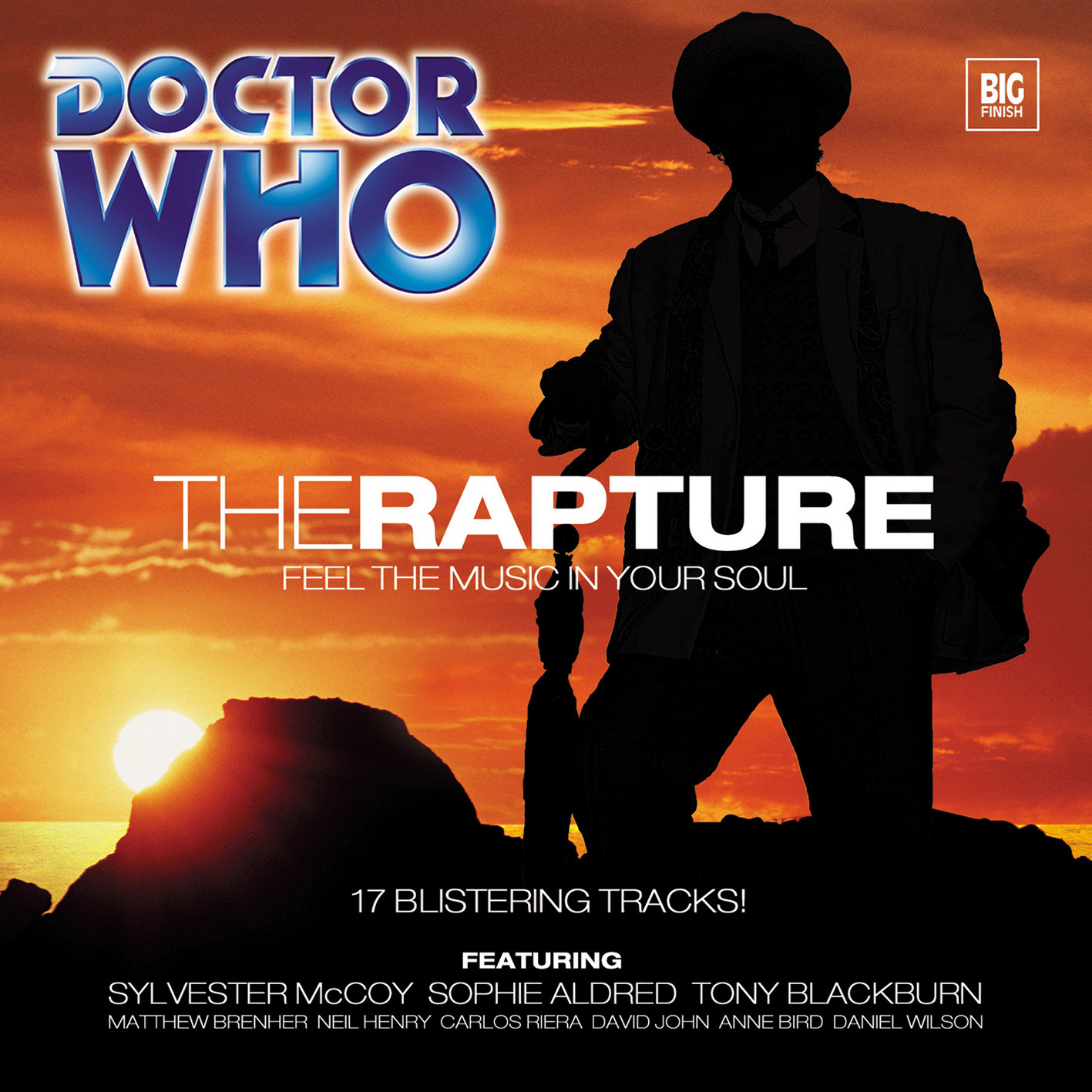
You've done a lot of writing beyond Dark Shadows though, and even beyond Big Finish. Would it be fair to say that it's all happened off the back of Doctor Who story The Rapture?

That's certainly where it all started, yeah. Although it's not exactly the most popular story Big Finish have ever released. But yes, that's where it all began!

So Gary Russell's to blame!

Yup! It's all his fault!

Gah, curse him. He also commissioned your Torchwood episode, of course.

Well, he was responsible for me meeting Russell and Julie. I'd already been working for BBC Wales on the Doctor Who websites. By then Gary was the script-editor on Torchwood and he recommended me to them.

Speaking of which, there's talk of new Torchwood radio plays going round at the moment. I don't suppose you'd know anything about those?

I don't, sorry, but if I hear anything definite then I'll be hammering down the doors to write one!

That’s great news!

Having contributed to TV spin-offs Torchwood and The Sarah Jane Adventures, the official website, various printed collections and the audio adventures, you must be the person who's got closest to writing for Doctor Who without actually having done so!

So how about it?

Yeah. I basically get emails from Cardiff saying "Joe! We want you to write Doctor Who.... the Experience!" But I love it! I've been so lucky in what I've been commissioned to write!

Yes, you just missed out... again!

Oh, it's hardly missing out! The last few years have been amazing!

Undoubtedly. You've said before that you'd only like to write another Doctor Who audio if the right story came along. Has that happened yet?

It's more that I feel I've done lots of them so I'd be more interested in writing one if it especially appealed to me. I like variety. I love writing kids TV but I also love writing dark short plays for an adult audience. One minute I'm writing a short story about the Cybermen, the next I'm writing a 13 part audio supernatural murder mystery, the next I'm writing John Watson's blog. For me, that's the appeal of being a writer.

Well, variety is the spice of... err... writing. Moving on, what's your guilty pleasure Doctor Who story?

I adore Silver Nemesis. I can see it's not the best but I genuinely don't understand how someone can't enjoy it - it's funny, silly, bonkers Doctor Who. Stopping alien invaders using jazz is something that could only happen in Doctor Who. And Lady Peinforte is a delight!

I love Delta and the Bannermen for similar reasons! There's something adorably naff about some of the McCoys, isn't there? Now, if you had to be locked in a room with one actor who's played the Doctor and forced to watch one story with them for the rest of eternity, who would it be, and which story?

Oh crikey! Christopher Eccleston because I think he's an amazing actor and a really interesting person. As for which story, maybe An Unearthly Child?

Interesting choices! And if offered a one-way trip to any place and time, where would it be?

I'd love to go back to my childhood, actually. See how it compares to my memories.

That's a great answer, we've not had that before! Taking everything you've written into account, what would you say you're proudest of?

Hooray! I don't know, actually. I'm so proud of The Rapture because it was my first professionally-commissioned piece of writing. I'm incredibly proud of my first short play - Nice Sally - because it was an amazing experience and the audience reaction was fantastic. At the moment, though, I'd have to choose Bloodlust. I'm just so proud of what we achieved with it.

It's worth remembering that your career was effectively started by sending a pitch off. Beyond practising and practising, would you say the most important thing for budding writers is to be proactive?

I think so yeah. Join a local writers’ or actors’ group. Look at the BBC Writers’ Room website. [link] But, yeah, just keep writing. And don't limit yourself. If you want to write because you want to write Doctor Who then you're doing it wrong. Doctor Who might be what's inspired you to write but it shouldn't be the only thing you want to write for. And go out. Go to parties, go to the pub. You need to know how people talk to each other, how they interact and so on.

Finally, we've talked about the future a little already, but is there anything we've not discussed you have planned for the immediate future?

I was really happy last year to do my first non-sci-fi TV - a kids’ show called Millie Inbetween - so I hope I'll get to do more of that. Other than that, my big plan this year is to finish a full-length film script and to write a full-length play for the theatre.

Well the best of luck with those. Joe Lidster, thank you very much for your time.

No worries! Thank you!