Showing posts with label Book. Show all posts

10 March 2016

Book Review: Doctor Who 365


Published today is the latest Doctor Who reference text from BBC Books, written by range stalwart Justin Richards. 365 Days of Memorable Moments and Impossible Things, as you may be able to guess covers the entire calendar (yes, even 29 February despite the title) with an entry related to the fictional Doctor Who universe for each day. Also listed are significant in-universe and real world events relating to specific dates. 

Richards states in his introduction that this isn't supposed to be read in any kind of order, just at a glance and that certainly comes across in his writing style. Entries contain rare information but it is equally accessible to the less-versed fan. In order to try and give this as full a review as possible, I did attempt to read the whole thing in order but only managed to reach the end of July in the few weeks I've had this. Up to this point, Doctor Who 365 has certainly been an entertaining read and it's helped by occasional illustrations.

There are a few bits of the book that have confused me slightly, such as entries that seem to bear no relation to the days they're included on, and a day's text taking up a second page just for another sentence or two, but there is much to admire here. This is a mammoth effort from Richards and it is no mean feat just to have compiled a list of events for each day. His familiarity with the programme comes across fluently in his prose, with topics including 'The Doctor Goes Back To School', 'The Fast Return Switch Nearly Destroys The TARDIS' and 'The Slitheen Decide The Earth Is A Commodity To Be Sold'. 

The way each entry is prefixed with this kind of title is a shrewd move on Richards' part as a seasoned viewer may instantly connect a piece to classics such as The Edge of Destruction or Black Orchid but those newer to the programme will still have some personal connection - 'the TARDIS was nearly destroyed?' or 'the Earth was up for sale?'. By covering the middle ground between the two extremes of fandom, Richards makes Doctor Who 365 universally appealing, reminding some readers of stories they had forgotten and providing an intriguing and informative few minutes a day for others. It's almost guaranteed that there will be new material for each reader, even for the more knowledgeable customer as some entries go into depth on subjects such as Vincent van Gogh or detail histories of television characters only previously discussed in other media.

365 isn't really what I'd describe as a coffee table book owing to its format, being more of a quick reference guide, but it is still published in a luxury hardback edition, allowing for a bit of wear and tear as it is pulled from the shelf each day. Despite a couple of peculiar choices, this does what it sets out to very successfully, working well both as an interesting daily dose of Doctor Who and if you wish to read the whole lot chronologically in a few sittings - though prepare for a little repetition.

In short, 365 isn't an essential purchase but, for its fresh approach to Doctor Who's vast canon and its amiable style and presentation, is highly recommend.


A huge thanks to Sophie Goodfellow at Emma Draude PR.

27 January 2016

Kroagnon Awards 2016: Day Three - Music and Books


Welcome to the Kroagnon Awards 2016! All this week, we'll be announcing all our favourite things of 2015, ranging from the broad to the niche. As well as being voted on by editors Dave, Matt and Tom, several categories have been decided by you, our readers, and industry experts. And Jonny Morris.


Kicking off today's round of awards is our Album of 2015, Froot by Marina and the Diamonds. The Welsh/Greek singer-songwriter's third album was her third UK top ten hit and yielded popular singles such as Happy, I'm A Ruin and Forget. Froot saw Marina move back towards the sound of The Family Jewels after the floor-filling sonics of Electra Heart, and was one of the most innovative and intelligently-crafted albums of the year. Adele's 25 naturally followed shortly behind.


Although it was released at the tail-end of the year, Adele's Hello quickly ascended the charts and spearheaded an inevitable revival of her global fanbase. Now, a month into 2016, her onslaught of the music industry shows no signs of letting up, with her follow-up single When We Were Young released last Friday. Both tracks are taken from 25. Also nominated was Years & Years' hit King.


Jonny Morris writes: "I can’t claim to be up-to-date with the latest music scene. That’s not to say I don’t enjoy new music – I’ve starred Emotion by Carly Rae Jepsen on Spotify – but as I haven’t listened to Radio 1 since Mark and Lard split up, it only really comes to my attention via recommendations. So my nomination of my single of 2015 is a track which wasn’t even a single but the opening track of an album of old Elvis recordings given a Philharmonically Orchestral treatment. Now, I know what you might be thinking, I was thinking it too. But, giving it a chance, listening to the first song, I was amazed. It worked. It was the same song, but it just sounded bigger. As big as Elvis’ voice, you could say. It did that great thing of taking old music and making it sound new – of making the dead sound alive."

Jonny Morris is a writer, tweeter and father. Visit his blog here.


Following David Bowie's tragic demise on 10 January, there was a resurgence in sales of his music, but Lazarus, the final single to be released while he was alive, had already been met with a positive reception. It was clearly a popular track with you, our readers, too as you voted it your favourite single of 2015. You also nominated Little Mix's Black Magic.


2015 was a huge year for London-born Jess Glynne with four singles hitting the top ten, and three of those rising right to the top, meaning she has now sung on five number one songs in under two years. Last year also saw the release of her debut album, I Cry When I Laugh, which reached number one too. After a long few years of hard work, it was really rewarding to see it all pay off for her. Also nominated was Adele, who returned to the world of music with quite some force as the year drew to a close.


Barely anyone knows who Public Service Broadcasting are, which is a shame as they bring something different, if not chart-topping, to an increasingly monotonous industry. Their blend of archive audio with newly-composed scores is unique and often insightful. Their 2015 album The Race for Space concerned the 1960s USA/USSR pursuit of space flight and the lead single, Gagarin, is a highlight. Definitely one to check out if you haven't already.


This song is truly terrible. Perhaps even as bad as last year's 'winner', It's My Birthday by Will.I.Am and Cody Wise. Avoid at all costs.


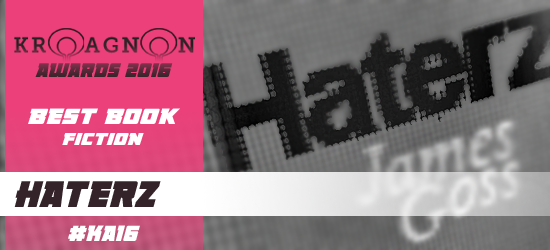
Concerning a man just trying to make the internet a nicer place, James Goss' Haterz is one of the most original books of recent years. Containing a startlingly accurate commentary on users of social media in 2015, Haterz is witty and intelligent in equal measure and thoroughly recommended. We also enjoyed Penguin's first two Books of British Short Story.


Of all the 101... or 1001... books, 1001 TV Series to Watch Before You Die, edited by BBC iPlayer maestro Paul Condon, is easily the most essential. It goes through television history from around the globe, right up to the present day, and features direct but intriguing entries from industry experts, including a few who will be familiar to readers of this site.


Una McCormack writes: "I strongly recommend Memory of Water by Emmi Itaranta. This is a vivid post-apocalyptic novel, set in a world of plastic seas and water shortages. It’s written in an intense and lyrical style: I found myself dreaming about it for weeks after. Incredible to think this is the author’s first novel."

Dr Una McCormack is a lecturer in Creative Writing at Anglia Ruskin University, and a New York Times-bestselling author. Visit her website here.

That's it for today! Come back tomorrow when all our awards will be about
the television adventures of Doctor Who!

28 November 2015

Book Review: A Place Called Winter by Patrick Gale


Review by Tom Newsom

I’d first heard about this book on Radio 2’s Book Club - they were full of warm praise for it - in early 2015. And although by the time I came across it in my local library, it meant that I knew the shape of the plot and what to expect, it did not disappoint. It’s the sort of book where that doesn’t weaken it, where the journey is more important than the twists, although there are some big ones.

It’s all about a man, Harry Cane. The book’s early chapters trace his cosy life in Edwardian England, from his early age to marriage and family responsibilities, before everything changes. We’re under his skin for most of this book, for he’s a character who never quite fits in anywhere, even though he tries - not in formal society, nor in the vast prairies of Canada, where he is forced to escape to. Even though the landscape changes vastly, the book doesn’t lose its footing - now he’s got even more to learn to become a farmer and landowner, to fit in with the tiny rural communities he finds there, and importantly to discover himself.

One of the quotes on the back of my copy says it “manages to be both tender and epic”, which is a perfect description. It covers a lot of ground but we never lose sight of the main character and what it all means for him.

Whilst reading it I was wondering if I’d recommend it to anyone unreservedly. And whilst it’s a cracking, solid book, there are a few scenes of violence that means it’s not a comfortable read at times. But then it’s not a comfortable adventure - and whilst there are terrible events, the tone always allows an everyday humanity and a feeling of hope afterwards. If anything it’s a book about survivors.

You can sort of tell it’s based on a true story, very loosely: the main character’s background came from one of the author’s mysterious relatives, which he then breathed new life into their actions by creating a character. He’ll never know what they were really like, or why they relocated to Canada, but the motives here feel real. The whole book has the ring of truth; I think that’s down to the research, plus the level of detail that’s then put in the writing. It doesn’t proclaim its historical accuracy on every page, but due to the compressed, fast paced plot (some big time jumps), there’s a lot of scene setting, well told. It also makes it a great read, one of those books you can really lose yourself in.

The historical detail doesn’t stop at the world the author has created either - it’s present in the character’s heads and how they see themselves. As the writer has said - “The challenge was to inhabit a homosexual life in a time when there are no words to describe any of the things the character feels or does.” It’s no spoiler to say that you honestly don’t notice this linguistic, mental gap when you’re reading it, although it is very much there. This book feels like a story very much of its time, even if any story like it wouldn’t be told for over half a century later. And I think the secret strength to this book is the characters: if the world around them felt real, then they feel doubly so, rounded and authentic - they make the most realistic of mistakes.

It’s an exquisite book, full of foreboding, adventure and human truths. Well worth reading, and it will stay with you for some time after.


04 June 2015

The Scientific Secrets of Doctor Who


The Scientific Secrets of Doctor Who is a great book. That much is certain in my mind, and I would wholeheartedly recommend it to anyone with at least a passing interest in Doctor Who or science and its history. What Simon Guerrier and Dr Marek Kukula have come up with here is a guide that works as in a variety of ways. For starters, it's a nice anthology of some original Doctor Who fiction. It also serves well as a collection of essays on the relationship between our beloved show and real science and thirdly, it makes a good quick reference guide with its occasional box-outs. It works most successfully when you consider the book as a whole though. With its variance of tone and topic it helps keep the reader engaged even in the more complicated places.

I probably ought to explain what this book actually is. The title is a little ambiguous but the format for each chapter is basically a short story set within the show's fifty-one year history followed by a non-fiction section explaining an area of science covered by the story. These are pleasingly broad and are grouped into three sections: Space, Time and Humanity. If you were approaching this book with the hope of finding out how a Sonic Screwdriver is built or learning the life cycle of a Skarosian giant clam, you won't get what you might be expecting. This takes a completely detached look at how the science included in the fictional side of the show marries up with what we actually know and predict. But, as the authors note on the first page, this equally isn't a guide to which bits Doctor Who got right and wrong. The end product is of course far superior.

Of the fifteen stories included, a third of them star the Twelfth Doctor. By far the strongest of these is David Llewellyn's The Mercy Seats, which is told from the perspective of fourteenth century poet Geoffrey Chaucer. This is an intelligent and witty tale with a perfect balance of character and plot. Consequently it's one of my favourite short stories of all time. Some of the other TARDIS line-ups chosen by the remaining contributors aren't entirely surprising - for example, Marc Platt delivers a pre-An Unearthly Child First Doctor and Susan tale and Andrew Cartmel a Seventh Doctor, Ace and Raine story - but there are also some pleasant billings. 

Rounding out my top three would have to be Una McCormack's In Search of Lost Time, featuring the Eleventh Doctor, and Jonathan Morris' The Hungry Night, starring the Christopher Eccleston incarnation. Both of these are really great little stories, with McCormack's being especially humorous and flawlessly nailing Matt Smith's portrayal. Jacqueline Rayner's Potential Energy narrowly misses out of this grouping, but her story is still excellent and massively humorous and clever. Other things of note for me were a War Doctor story (from Justin Richards) and an entry from James Goss, another of my favourite writers. The only Doctor who doesn't get a story is Paul McGann, which feels like a bit of a shame given the expanse of his era. It's also slightly disappointing that Guerrier himself didn't write a story for this given how good he is at that side of things.

But now to cross to the other half of the book. The subjects discussed by Kukula and Guerrier are extremely broad, ranging from artificial intelligence to the human memory to astronomy and astrology to the Second World War. It's a credit to the author that they make each section just as interpretable and interesting as the next. Speaking personally, I'm much more interested in the science of humans and the world around us than space and what's often referred to as 'hard' science fiction. However, Scientific Secrets makes even the subject matter I'm naturally less inclined towards intriguing. The authors have a writing style perfect for this type of publication; they write with refreshing permeability whilst still including a wealth of facts and figures. It never feels like a burden but this level of education and information is hardly surprising from the man who brought you the mind-bogglingly comprehensive Bernice Summerfield: The Inside Story.

This isn't an especially cheap book at £16.99 for the hardback, but I'd say it's worth every penny. Not all of the stories are top-drawer but overall this is a comprehensive book like Doctor Who fans have never had before. It's also laid out very appealingly inside, which helps sell the potentially opaque content (never a danger in Kukula and Guerrier's hands) even further. This is a unique publication and certainly one of which all contributors ought to be proud. If you're not especially science-minded (bearing in mind a lot of this was at least passingly familiar to me from physics and computing A Levels) you needn't worry as Guerrier himself comes from an arts background. This is written in perfectly approachable - but never patronising - language, making it a good choice for beginners and veterans alike.

It's no surprise that there's an lengthy launch tour lined up for the next few months, including a high profile event at the Royal Greenwich Observatory soon. If you only buy one Doctor Who book this year, make it this one.


Thanks to Sophie Goodfellow and Simon Guerrier.

01 April 2015

MA: The Plotters


There's no doubt in my mind that The Plotters, one of only two contributions to the William Hartnell era by Gareth Roberts, is excellent. In it, the Season Two team of the First Doctor, the eternally-paired Ian and Barbara and Vicki arrive in seventeenth century London, in another bid to return the school teachers home. In one of those happy coincidences Roberts notes the Doctor seems to have more than fair share of, the TARDIS has touched down just days before the Gunpowder Plot reaches its climax.

Pleasingly, this is a "pure historical", devoid entirely of extraterrestrial interference - the Doctor excepted of course. The 1600s are not a period I've ever been particularly interested by, but in Roberts' skilled employ, they really come alive. I must confess I was pretty much entirely ignorant of the Gunpowder Plot beyond the location, date and most famous conspirator (Fawkes). As a result of this novel, though, I certainly want to find out more. The politics and machinations of each party exploiting and playing off the others is fascinating; Roberts makes it instantly accessible and continually intriguing. 

After allowing Ian and Barbara an afternoon at the Globe once they realise they're several centuries out of time, the Doctor hatches his own plan. It turns out he's always been interested by the Gunpowder Plot, and under the guise of investigating the translation of the Bible, he leads Vicki right to the quarters of James I, much to the King's delight. 

This is a hugely witty novel, without ever tipping into comedy or farce. The author neatly treads the line to deliver a massively readable narrative that never drops the ball. Despite being only a few pages shorter than The Sorcerer's Apprentice, I read this almost three times as quickly. Little surprise then that I rank this at the opposite end of the scale. There's laughs from absolutely every character, but the integrity of the plot and intelligence of the narrative is never damaged. There's a brilliant revelation at the conclusion that makes me want to reread the whole thing - undoubtedly a good sign. 

To be frank, although I can appreciate the quality of the Hartnell era (every season of his has some remarkably good stories), it's never been a favourite of mine. I have particularly little experience of Maureen O'Brien's Vicki, having seen a handful of her stories once or twice each several years ago. So until now I've never had much of an impression of her. In Roberts' hands, Vicki is intelligent, caring and self-deprecating, and above all endearing. If her TV characterisation marries at all with her portrayal here, I might have to prioritise watching and listening to her era. 

Even though the plot is initially split into two main streams, for large swathes of the novel, the action's divided four ways. These never feel forced though. Indeed, one of the most impressive things about The Plotters is how realistic it all feels. This really does feel like an historical recounting rather than a well-woven plot, meant in the nicest possible sense. History nerds ought to heed Roberts' opening warning that this isn't 100% accurate - one event in particular will probably come rather out of the blue. It does however make for a great read. 

The First Doctor is simply excellent here, and as a result I've sought out more of his Missing Adventures. I doubt he'll be portrayed as acutely to my tastes as he is here, but if any of the authors can get even halfway there, we're onto a winner. Ian and Barbara are equally great, and having four leads never seems to faze Roberts. Even the TARDIS is tied effectively into proceedings. James, and all the other contemporary characters, are quite excellent, with distinctive personalities the reader can immediately grasp effortlessly. The insights we get into characters is first rate, and the background Roberts slips in (however true it is) serves only to add to them, and is never arduously lengthy. 

This really is an excellent story, in every sense. I may be inherently biased because Roberts' writing has always appealed to me, but I'm yet to see a review of this that's anything but glowing. It's not just the engaging narrative that I loved but the style in which Roberts writes. Over the course of the book, he slowly adopts a vocabulary akin to that of his seventeenth century characters. It's done so expertly the transition feels entirely natural and only serves to enhance the overall experience reading this book offers. Roberts took both a period and a TARDIS team I wasn't especially interested by and captured my attention entirely. Given that adaptations of some of his other Missing Adventures are currently in hot demand with Big Finish, I'd love to see this added to the schedule. In fact, I'm so enamoured with this I've already started my own adaptation, so David Richardson, if you're interested..! In conclusion, this is now one of my favourite Doctor Who titles, and a breath of fresh air. Allow yourself to be immersed in a world of intrigue, deception and wit for a few days - I promise it'll be worth it. 

In a Nutshell: Undoubtedly a forgotten classic, The Plotters is one of the most accomplished books I've ever had the pleasure to read.