13 March 2015

TV: Banana viii


And so we come to the end of Cucumber's little sister show. Banana has come in eight weird and wonderfully diverse packages, topped off with a callback to both the third episode of the series, and the last two of Cucumber. But you needn't have see any of those three marvellous pieces of television to enjoy this spellbinding climax. 

Vanessa is a contract industrial cleaner, who employs Jonjo to source labour. Many of his subjects are of course immigrants, but these are young girls from Africa. When one reaches out to Vanessa, telling her what he's done, and asking for help, there's a caustic reaction to say the least. From Vanessa's good nature in Sue Perkins' excellent episode earlier this series, viewers can be fairly confident that she'll make things right in the end somehow. 

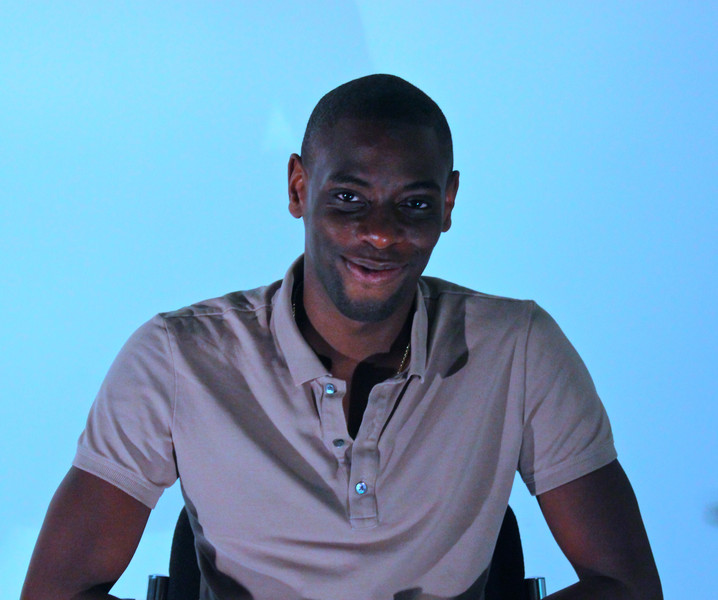
Over the course of fifteen minutes or so, dedicated entirely to strong actresses Lynn Hunter and Nikki Fagbemi, the pair learn to communicate in a method transcending language. Vanessa is furious that Zara has told her about it. She's known about it for years, but now the hard decision comes as she's forced into action by the rules of television. There's a lovely little number at the end too. And there's a sting in the tale that'll leave you with a massive grin across your face.

It must be said that this episode really doesn't fit the format established by the preceding seven, including two by Davies himself. In a way, it resembles the others in that it forces the protagonist/s to take a stand and do what they feel is right. But there's no love story here. In our last ever visit to the Calico Flats, they're transformed and there's hope on the horizon for Vanessa's workers, with the possibility of moving in.

Banana's been an odd little series, often only loosely linked to the main show, but I've loved it. It's delivered exceptional drama, admittedly not quite on the scale of Cucumber, but great nonetheless. It's pushed the boundaries of modern TV, and has been unashamedly frank in its storytelling. The best four episodes for me were the first three (chronicling Dean, Scotty and Sian) and the sixth (written by and starring Charlie Covell) but there's been moments in all of them that I've liked.

I'm very grateful to everyone who worked on this interesting little series for brightening the TV landscape. While change will inevitably slow, hopefully this series, along with its sister programme, have started something of a revolution. That said, Queer  as Folk made barely any lasting impact, as well as that was received. We can live in hope. If this was all it was meant to be, that's still great. 


TV: Cucumber viii


Here we go one last time then.

That's much how writer/creator Russell T Davies seems to approach this episode to me. This may well be his last chance to say what he wants to so publically and so truthfully, and I'm sure he knows it. The eighth, and final, episode of Cucumber sees Davies' signature storytelling style used in miniature, as Henry tries to surround himself with friends to help him forget what's missing.

As well as the Collective - the former inhabitants of the Calico flats moving into Henry's house - works, it disbands before too long and we're left once more with just Best, Freddie and Cliff. In Davies' (and Benjamin Cook's) phenomenal The Writer's Tale, there's an illustration of what he would've wanted the Doctor's son to look like, had 2008 Doctor Who episode The Doctor's Daughter been taken down a different path. The picture, and accompanying description, seem to fit Freddie Fox perfectly, and I don't wonder that the character was reimagined for Cucumber.

Con O'Neill is once again excellent as Cliff, and in this role ascends to my third favourite of the series. He's wonderfully witty and wry, and the idea he's anything other than perfect for the role as imagined by Davies should be dispelled. However, there are two frankly fantastic performers who just edge him out. Julie Hesmondhalgh is undoubtedly best known as Hayley on Coronation Street, but from now on it'll be hard not to think of her as Cleo. She's embodied the part that's often been labelled the voice of reason in a series full of mad events and decisions and made it her own. It really is coincidence that the best episodes of the series - the first and sixth - are the two that don't feature her, since she's truly excellent.

This series is made entirely by Vincent Franklin as Henry, though. He is perfectly cast in the role, being able to articulate the every whim of Davies with flair, ease and - most importantly - excellence. This episode is no different, and the final scene shows him off at his best again. Indeed, the sincerity of the final line stays in the mind long after the credits roll. It's an oddly profound note to end on, but in a way that's entirely appropriate of this series. It made me think a lot, and clearly I'm not the only one as - most prominently - Gareth Roberts also tweeted about its truth. I think there can be no argument that in narrative terms Cucumber has been stunning. 

There are many to attribute its success to of course. Davies is naturally the main driving force behind the show, but if I start praising him I'll be here all day. Suffice to say his skill in executing both long and short-term storylines and narrative tricks still remains unparalleled in my eyes. His co-executive producers Julie Gardner and Nicola Shindler need a hearty thanks, and I'm so grateful to Piers Wenger for commissioning this at all. The directors have all been beyond amazing too, and Jake Polonsky has kept things looking beautiful. Beyond the actors mentioned above, James Murray (Daniel), Fisayo Akinade (Dean), Letitia Wright (Scotty) and of course Cyril Nri have all been inspirational. 

Behind the cameras, there's been some highly commendable work that I've barely mentioned. Louise Page is another face familiar from Davies' BBC Wales days, and I must say all her costumes have been right on the money. Dean's yellow hoodie, for example, sums up the character perfectly. Murray Gold has been amazing, and if there was any doubt he had a great ear for basslines (I can still hear Westminster Bridge whenever I want), Cucumber has set them straight. His choral pieces were my favourite, but the whole series has been excellently scored from start to end. And Mark Adcock has done excellent things as a camera op for all eight episodes. Having tried this myself, I know how much of an art it is, and the way Adcock and co. make it look so effortless is truly a skill. 

And a huge thank you to all the electrical, make-up, art and sound departments that have made this so special. This will go down as one of my favourite series, thanks to everyone involved. Andy Pryor's casting can't go unmentioned, for making it such a success. And I'm sure none of it would have happened without Matt Strevens. So thanks all. 

Beyond all that, though, Cucumber's given me a new catchphrase - a Henry-style "oh fuck off!". And really that's what I direct at all the naysayers the series has accumulated, few though they are. Thanks Russell, Vince, it's been fucking amazing. Cucumber's taught me a lot, but really it's underlined one thing I was already fairly certain of. 

Men are mad.


06 March 2015

TV: Cucumber vii


There's a few ways to go following a death. Russell T Davies' choice sits perfectly well with me. However much we can now see the first six episodes of Cucumber were the story of Lance, it's always been about Henry. Following the death of a loved one, most of us are something of a mess, especially emotionally. The seventh episode in the series follows Henry as he struggles to come to terms with his loss. I've read reviews complaining that this is an inconsistent episode, but that seems to be entirely the point to me. Grief, like love, is like no other emotion, and everyone handles it differently.

We begin at Lance's funeral, where Henry resents the deceased's sister Marie revelling in all the sympathy. He retires to the safety of his friends, and I'm pleased to say the marvellous Con O'Neill as lawyer Cliff features very prominently in this episode. This is an illustriously heady mix of emotions like you've not seen before. There's much sorrow as Henry balls his eyes out, lust as he and his flatmates chase down a man with a little help from Grindr, anger as he rages at Marie, and finally ecstasy in the closing moments.

The scene between Freddie, Dean and Henry in the car as they wait for a shower to pass is one of those that should go down as a writing masterclass. Davies proves once again how good he is at writing characters trapped in a confined space - as he has rightly received much acclaim for doing in Doctor Who's Midnight. At the top of the episode, we see Freddie ready to leave the flat, to move into a place that's more expensive, smaller, but with better prospects of sex. Slowly though, he reverses that decision and really grows up from the hedonistic thrill-seeker we were introduced to at the start of the series into a young man more focused and driven. His girlfriend seems to have been forgotten, but that's understandable really. 

There's so many superb scenes in this, and I think Vincent Franklin must be in every single one of them. A lot is demanded of him, but as always he more than rises to the challenge. I can totally understand Davies' comments in a video interview for Channel 4 that he knew he had his Henry as soon as Franklin entered the room. He embodies the character, and makes him one of my favourite of all time. The scene in the bar (the same one as in short tie-in drama Screwdriver?) between him and Marie is icily electric. She comes across as a real bitch, thanks to a solid performance from Adjoa Andoh, and it's oh so satisfying to see her storm from 'her' house at the conclusion.

I knew the flats were going to play a part towards the end of the series. How, though, I couldn't have predicted. The mystery of the cheap rent was built up so much over the opening episodes, I could tell it was going to come back to bite our leads. And indeed it does as 'Roderick' decides to reclaim everything on his property. The scenes of Henry standing still, watching barefoot as the shit hits the fan, are just mesmerising. In an unmentioned twist of irony, it may well have been better for Freddie if he had moved out after all.

It's so good to have Euros Lyn's work back on our screen. There's several memorable high shots in this episode, and he accurately captures the scale of every scene. I know I've praised him every week, but Vincent Franklin is once again the star of the show, and Con O'Neill is just fantastic as Cliff. There's no supermarket scene here, because things have moved on. Although it must conform to TV standards to some extent, I love how much of a natural flow Cucumber has. Events that would normally be saved for a finale surprise the audience two episodes early (was I the only one wondering whether there'd be a marriage, not a death, by the way?), leading us to question just how big Davies plans to go next week. The final scene really does feel like the end of the series, so I can't wait to see where Cucumber goes in its last ever (sob!) episode. 


02 March 2015

Interview: Joseph Lidster


Joseph Lidster has written scripts for theatre, radio and television, including episodes of Torchwood, The Sarah Jane Adventures, Wizards Vs. Aliens and Millie Inbetween. You can find him on Twitter here.


Good evening Joe. Thanks very much for agreeing to this.

No worries.

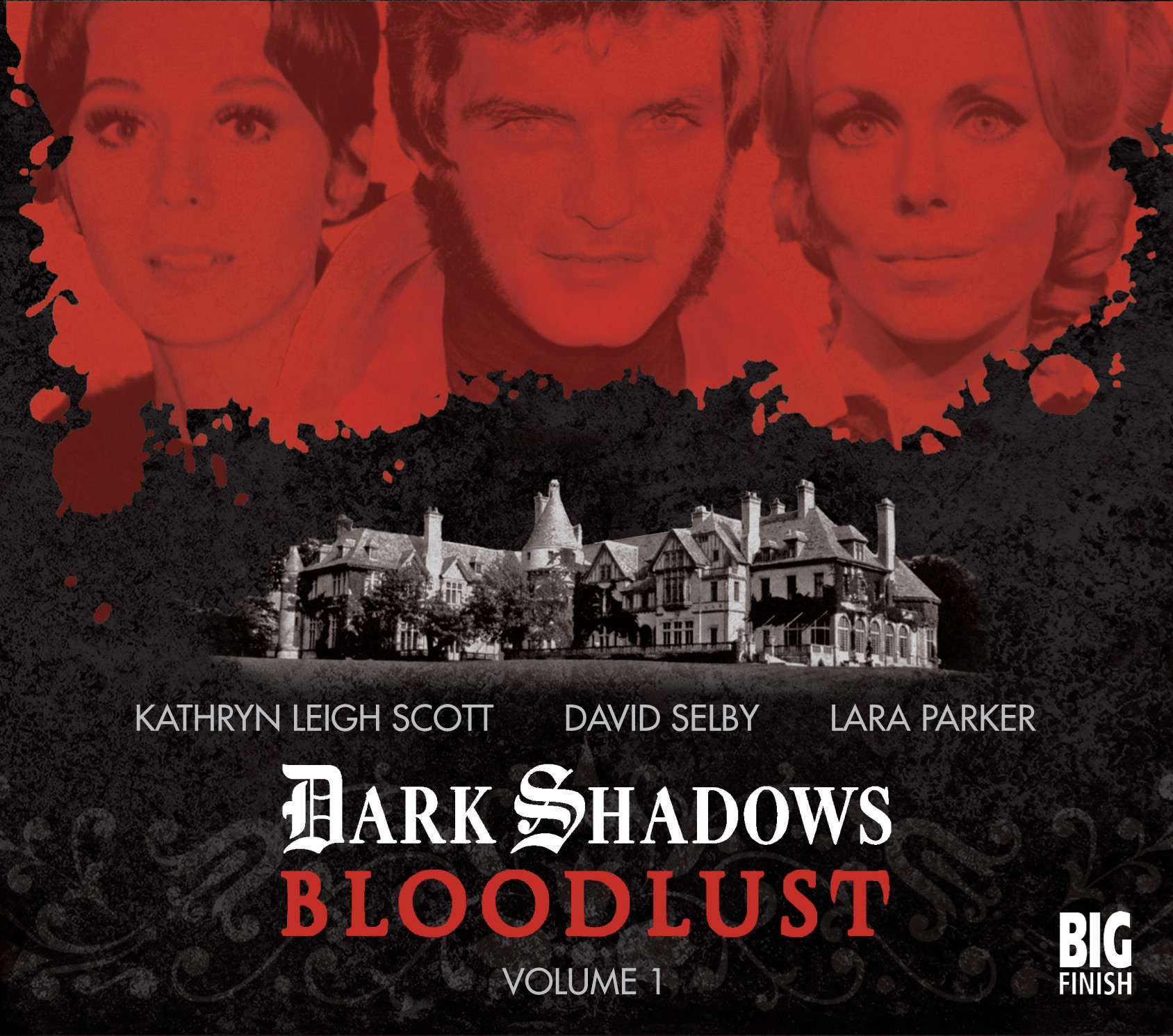
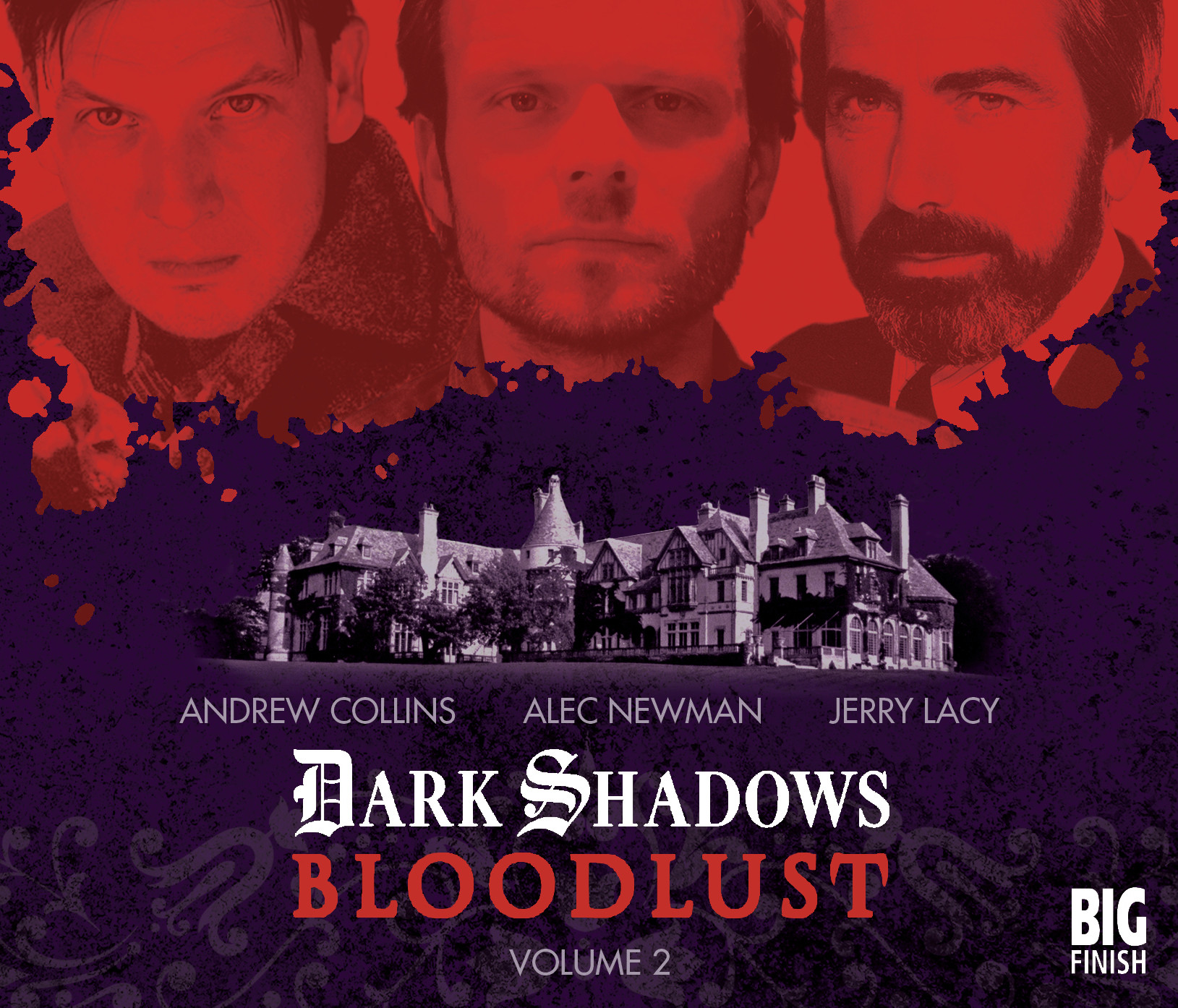
Dark Shadows: Bloodlust, the series you recently co-produced with David Darlington, has been met with great critical acclaim. 

We were hoping for a positive response purely because we'd put so much work into it. Also, I personally loved it. I loved the storyline, the scripts, the acting, the music, everything. So yeah, we were hoping for a good response but I don't think we were prepared for just how well it was received. We've been very happy over the last few weeks, that's for sure.

When did you first start putting it together?

Me and David started talking in July 2013, I think. We sent Big Finish our initial pitch document in August and then, when that was approved, we contacted Will [Howells] and Alan [Flanagan] and started discussing storylines.

And how did you come to decide on the writing team? Alan and Will had only written one Dark Shadows audio each prior to Bloodlust. Without wanting to detract from either of them, to an outsider they may not have seemed like the obvious choices.

Both of them had proven themselves to be a) fantastic writers and b) interested in the series. They'd both watched episodes and become actual fans of the show. Practically, though, an important thing was that we all lived in the same city. We knew that the writers needed to physically meet up to chat about ideas (and drink lots of wine). We could have discussed everything over email - and obviously once we started writing there were lots of email discussions - but nothing compares to having a group of writers in a room just batting ideas back and forth.


That makes sense, especially the wine! How did you go about devising and splitting up the plot? How much was known about each episode when it was assigned to its writer?

It was all very complicated! We discussed which existing characters we were using and devised our new characters. We then worked out the main storyline. The series was split into two blocks - episodes 1-6 and episodes 7-13 - and we worked out how the storylines would progress over 1-6 with a vague idea of where we were going for 7-13. We then worked out roughly what needed to happen in each episode. After that I wrote up a more detailed plan for each episode - basically giving each character/storyline a different colour and plotting them over the episodes. We then talked about whether we had any preferences as to which two in the first block we wanted to write. For example, I was very keen to write episode 5 as it had the vibe of one of those EastEnders episodes set at night - it's basically a few small combinations of people talking. Will was keen to do Episode 1 (which I was very grateful for as it was by far the hardest episode to write). When we got into the second half of the series, Alan specifically wanted 7 and 12.

I see. How much influence did you all have on each other’s scripts and did any bits of others' surprise you?

It really was a group effort. Everyone read every draft of every episode and gave notes on every draft. We had a read-through of 1-6 with us reading the characters and gave notes on that as well. It wasn't so much a surprise but what really worked was how by having three writers working together, the characters became much more interesting. For example, I felt that on a couple of occasions, Alan had overwritten Kate and Andrew BUT it made me realise that me and Will had underwritten them. That was so important because it really made us sit down and look at each character and see who was working and who wasn't. And if a character wasn't working then we had to sort it.

Frankie was a character, for example, that we really struggled with. He's an everyday working class man but that, in itself, doesn't make him interesting (especially as he's often partnered with Kate, who's very British, has a career, has an interesting backstory and is basically an alcoholic) so we added elements such as hints of underlying anger issues and, then, I suggested casting Roger who has a very distinctive way of speaking and we tweaked the dialogue to match that.

It’s really interesting to hear you talk so candidly about the creative process. How hard was it logistically to produce? Nowadays, there's quite a lot of information available about the creative side of the role, but not so much about the rest. And there are quite a few recording dates listed for Bloodlust...

Ha, it was genuinely one of the hardest things I think me and David have done. You're looking at 25 actors in three cities on two continents working from a 675 page script. It's almost impossible to get that to work but somehow we did. I think only two things weren't recorded - a couple of Kathryn Leigh Scott's lines (one of which David managed to fake by editing together from other lines she had recorded) and a section of Stephanie Ellyne's dialogue, which we recorded later. The trickiest thing, I think, is getting the levels right. You look at Episode 7 which is a lot of people in one room talking. Some of them are on a stage, some are in an audience. People are having little quiet private conversations, shouting up to the stage, shouting from the back of the room and the front of the room and so on. So many of those actors recorded their lines individually or in groups of two or three over the space of a couple of months.

So we had to really liaise with our LA director, the fantastic Ursula Burton, to get things like that right. We'd also record different takes over here - getting an actor to say their lines normally, then say them again but a bit louder and so on. For example, if a scene specifies there's a thunderstorm, then we'd say, "Can we do it twice - once normally and one again but speaking up over the storm, to match how the US-based actors do it?" I think it all comes together but yeah, there were a lot of sleepless nights!

Well all the hard work paid off; the results are seamless! When the opportunity presented itself, it must've been irresistible to release the last episode on the same night as Lucy Beale's killer was revealed on EastEnders?

Ha, that wasn't planned at all! That EastEnders storyline did influence us a great deal. It made me look at shows I love, such as The Killing and Twin Peaks, and examine what makes them work. In many ways, in those shows, the important thing isn't actually whodunnit. It's all about what happened. What are the secrets each character has about the night of the murder.

We know when the cliffhanger to episode 4 of The Killing is that X lied about where they were that chances are they won't be the killer basically because there's a load of other episodes to go. So what's interesting for the audience is discovering why they lied. And that's what EastEnders has done brilliantly and it's what we really tried to do. And, again, it's why every single one of our characters had to be interesting - both in how they were written and how they were performed. We wanted the audience to suspect everyone.

Well you had me completely confused!

Hooray!

Looking back on it, is there anything about Bloodlust you'd change?

I don't know that I would. It's not necessarily that I think it was perfect (although like I say, I do love it) but more that I can't think of even a small thing we could go back and change that wouldn't have a huge effect on everything else around it purely because it was so multi-stranded. It really was like a house of cards - every line, every character, was necessary.

Yes, I can see that. In fact one of Bloodlust's greatest strengths in my opinion was how interlinked everything was.

You've mentioned before that you always wanted to be an actor before getting into writing. Several of your contemporaries (Alan and John Dorney, among others) do both. You have done a couple of bit-parts, but would you still be interested in acting in a more prominent role now if the right part came along?

To be honest, I just don't think I'm good enough. It's always fun on the UK recording days because we'll get an actor in, or two or three together, and I'll read in all the other characters for them to play against. So you could put together a version of Bloodlust featuring me doing my best impressions of Angelique, Maggie, Trask etc. It's the closest I think I'll come to professional acting and I don't think it's something anyone wants to hear!

There's a subscriber bonus right there! Speaking of which, can you give us any exclusives about this year's six remaining Dark Shadows releases, the Dramatic Readings?

Not really, sorry!

Aw, spoilsport!

All of them are set after Bloodlust - although a couple of them are characters telling us about events that happened prior to Bloodlust, The idea, though, is that all of them move the story along for our characters. They're six standalone stories but there are serial elements.

Now, next year is of course the programme's fiftieth anniversary. Do you and David have any ideas about how you'd like to mark the occasion within the realms of Big Finish?

We've got a few ideas but we haven't been commissioned further than the already announced Dramatic Readings so it all depends on sales and so on. But yes, we certainly have a few ideas - a few too many ideas actually - about where we'd like to go next!

Would you like to do another mini-series in the same kind of format as Bloodlust?

Oh, yes, definitely. It was so rewarding seeing such an active engagement with the series on the forums and so on. It's the hardest thing I've ever done but I'd do it again like a shot.

Excellent! Do you have any particular favourite characters from the original show?

Julia Hoffman is possibly the most fascinating character there's ever been on television but generally they're all fantastic - thanks often to a brilliant cast. It's one of those shows where you don't notice when a character is missing because there's not a dull one amongst them. It's one of the reasons we knew the casting for Bloodlust was so important: our new characters had to try and be as distinctive and interesting (without being OTT or caricatures) as the original series' characters.

Was there a particular reason, beyond already having so many characters, that you chose not to bring her back?

Basically because we'd have to recast her, sadly. And so much of Julia is down to Grayson Hall's astonishing performance. I'm not saying we'd never do it if the right story came up but that story wasn't Bloodlust.

As I mentioned above, this series has been received fantastically, by fans and those less familiar alike. Do you have a particular favourite comment you've read?

Actually my favourite comment was a conversation I had a with a friend of mine. He bought the series despite not being a fan of Dark Shadows or audio drama in general and he - genuinely - loved it from Episode One. After Episode Four or Five, I think it was, we were sat in the pub and he was desperate to tell me that he thought he had worked it all out. He'd actually got the set-up right but not the killer. That someone with no interest in Dark Shadows had become so invested in the story, well that's just the highest compliment really.

As a newcomer to Dark Shadows, I had a similar experience. It's really heart-warming that it had that much of a reach though.

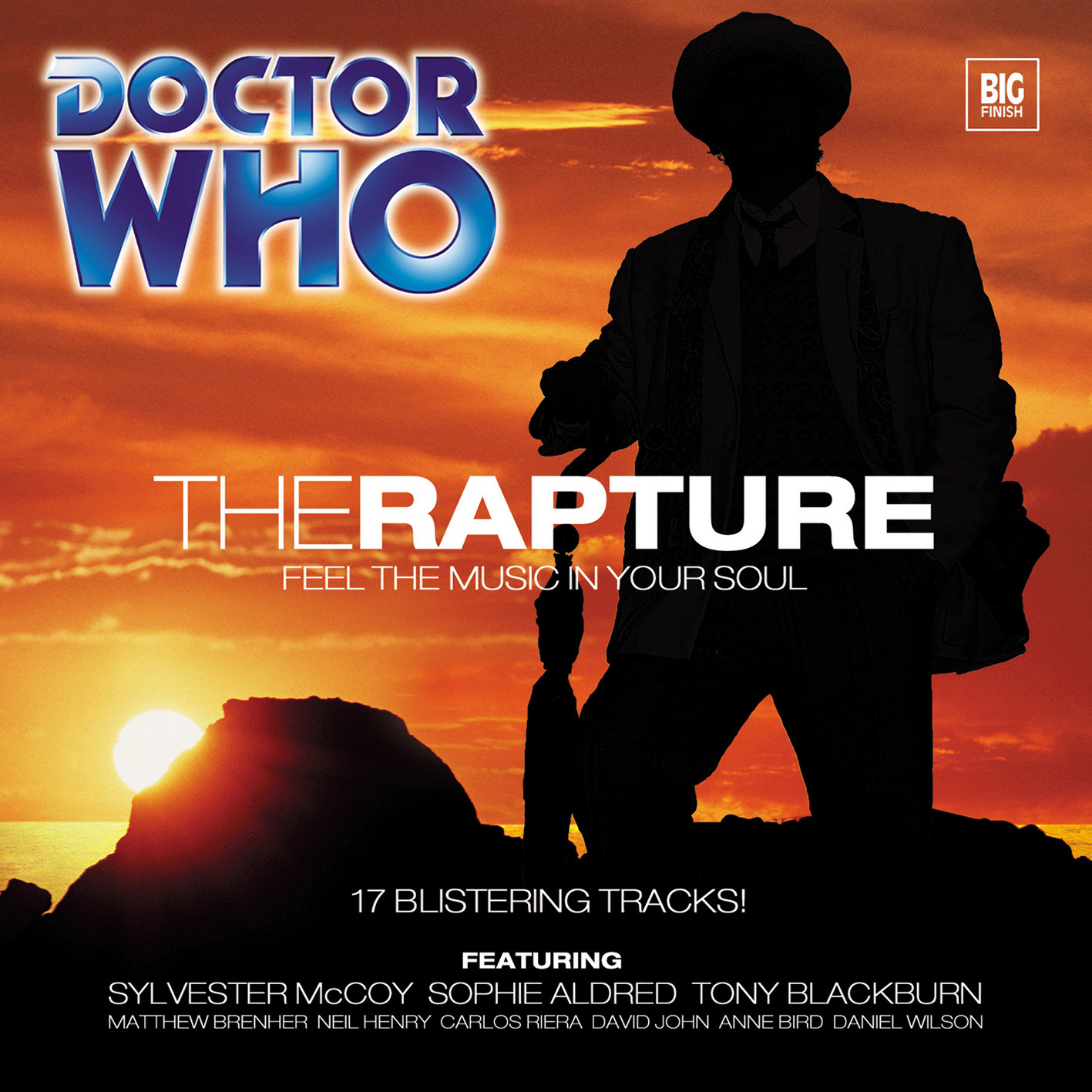
You've done a lot of writing beyond Dark Shadows though, and even beyond Big Finish. Would it be fair to say that it's all happened off the back of Doctor Who story The Rapture?

That's certainly where it all started, yeah. Although it's not exactly the most popular story Big Finish have ever released. But yes, that's where it all began!

So Gary Russell's to blame!

Yup! It's all his fault!

Gah, curse him. He also commissioned your Torchwood episode, of course.

Well, he was responsible for me meeting Russell and Julie. I'd already been working for BBC Wales on the Doctor Who websites. By then Gary was the script-editor on Torchwood and he recommended me to them.

Speaking of which, there's talk of new Torchwood radio plays going round at the moment. I don't suppose you'd know anything about those?

I don't, sorry, but if I hear anything definite then I'll be hammering down the doors to write one!

That’s great news!

Having contributed to TV spin-offs Torchwood and The Sarah Jane Adventures, the official website, various printed collections and the audio adventures, you must be the person who's got closest to writing for Doctor Who without actually having done so!

So how about it?

Yeah. I basically get emails from Cardiff saying "Joe! We want you to write Doctor Who.... the Experience!" But I love it! I've been so lucky in what I've been commissioned to write!

Yes, you just missed out... again!

Oh, it's hardly missing out! The last few years have been amazing!

Undoubtedly. You've said before that you'd only like to write another Doctor Who audio if the right story came along. Has that happened yet?

It's more that I feel I've done lots of them so I'd be more interested in writing one if it especially appealed to me. I like variety. I love writing kids TV but I also love writing dark short plays for an adult audience. One minute I'm writing a short story about the Cybermen, the next I'm writing a 13 part audio supernatural murder mystery, the next I'm writing John Watson's blog. For me, that's the appeal of being a writer.

Well, variety is the spice of... err... writing. Moving on, what's your guilty pleasure Doctor Who story?

I adore Silver Nemesis. I can see it's not the best but I genuinely don't understand how someone can't enjoy it - it's funny, silly, bonkers Doctor Who. Stopping alien invaders using jazz is something that could only happen in Doctor Who. And Lady Peinforte is a delight!

I love Delta and the Bannermen for similar reasons! There's something adorably naff about some of the McCoys, isn't there? Now, if you had to be locked in a room with one actor who's played the Doctor and forced to watch one story with them for the rest of eternity, who would it be, and which story?

Oh crikey! Christopher Eccleston because I think he's an amazing actor and a really interesting person. As for which story, maybe An Unearthly Child?

Interesting choices! And if offered a one-way trip to any place and time, where would it be?

I'd love to go back to my childhood, actually. See how it compares to my memories.

That's a great answer, we've not had that before! Taking everything you've written into account, what would you say you're proudest of?

Hooray! I don't know, actually. I'm so proud of The Rapture because it was my first professionally-commissioned piece of writing. I'm incredibly proud of my first short play - Nice Sally - because it was an amazing experience and the audience reaction was fantastic. At the moment, though, I'd have to choose Bloodlust. I'm just so proud of what we achieved with it.

It's worth remembering that your career was effectively started by sending a pitch off. Beyond practising and practising, would you say the most important thing for budding writers is to be proactive?

I think so yeah. Join a local writers’ or actors’ group. Look at the BBC Writers’ Room website. [link] But, yeah, just keep writing. And don't limit yourself. If you want to write because you want to write Doctor Who then you're doing it wrong. Doctor Who might be what's inspired you to write but it shouldn't be the only thing you want to write for. And go out. Go to parties, go to the pub. You need to know how people talk to each other, how they interact and so on.

Finally, we've talked about the future a little already, but is there anything we've not discussed you have planned for the immediate future?

I was really happy last year to do my first non-sci-fi TV - a kids’ show called Millie Inbetween - so I hope I'll get to do more of that. Other than that, my big plan this year is to finish a full-length film script and to write a full-length play for the theatre.

Well the best of luck with those. Joe Lidster, thank you very much for your time.

No worries! Thank you!

27 February 2015

TV: Banana vii


This is something of an oddity, even amongst Banana episodes. Unrequited love is a topic that hasn't really been covered - it could be argued it was briefly with Josh and Sophie in episode five, but it was hardly the focus. Here, Frank ends up in a threesome with the more conventionally handsome Ben and Aidan, and pursues the latter the following morning, looking for something more.

The pair flirt with the idea for a morning - we even get to flash forward nine months - but ultimately hunky Aidan ends it. They were clearly never meant to be though, with Frank more invested from the start. At first, you think it will work out, Aidan will drop his prejudices, and they'll live happily ever after, thanks to the general shape of the series so far. But unfortunately, it isn't to be.

Instead this ends up as both a cynical and an optimistic commentary on modern society. Cynical because of its sleight against modern values, and not appreciating the opportunities we're given. Rushing into things without full consideration. Aidan just can't go out with someone that he doesn't find physically attractive, and that's fine. Some people are just like that. But so much prominence is devoted to that topic that I can't help but feel it was an intentional stab by the writer. And to address my second proposition, I find this optimistic because it tells us that any day - every day - could be day one. You might find the person you're supposed to be with any day, and that's a magical notion. 

Luke Snellin's episodes seem to have been those that are slightly off-kilter for me. That's not to say they're bad, but they're certainly the exceptions of the series - if a series as varied as this can have a norm to deviate from. The final episode of the series looks to be a whopper, and I for one can't wait. This has been a very interesting series, one that's dared to push the boundaries in all the right ways, and I'm so grateful we got it. The quality of storytelling we're getting here is pretty much unparalleled in today's television landscape. Trust Davies to be the one to broaden our minds - again. 

Excellently made, but lacking a certain something.


TV: Banana vi


Charlie Covell returns to script her second episode of the series, and also stars as the main protagonist, Amy. Right from the off, we're shown everything we need to know about her. She's performed extremely well by Covell, and it's clear that the writer knows her character inside out, adding little tics to the performance. I really liked the way this was subtly package as a day in the life for Amy as she bounces from home to work to dinner, all the while scared stiff that everyone she sees will drop dead if she doesn't do all she can.

After a few minutes' adjustment, I found Covell to be really quite endearing in the role. This is half an hour of character drama with one of the most likeable characters Banana has presented us with. We've all had the moment where we clam up or gabble at the worst possible moment, and Amy gets for an entire evening when she goes on a date with policewoman Kay. Really, Kay is quite peripheral to the whole thing, which is more concerned with showing us that there's someone out there for everyone.

The entire episode is shot beautifully by Al Mackay, yet another director Banana has introduced me to. From his previous work (largely as a location manager) it seems something of a gamble was taken on him by executive producer Nicola Shindler (who I don't praise nearly enough!) and co. It totally paid off me, and indicates that he should have a bright future in this field. The images broadcast were particularly photogenic, but his command of actors clearly isn't slack either. The moment in the last scene where the buildings around our two leads light up was electric. In the preceding moments, that's exactly what I was imagining I would do. It's a rare occasion when I actually second guess what's coming next, so this was quite pleasing.

Although there wasn't any tangible jeopardy in this episode was as with, for example, Bethany Black's a couple of weeks ago, the will she/won't she of the date (and following it) is made into more than enough of an event. TV focuses on the small moments that mean so much to the individual, making this series especially refreshing. Something of a recurrent theme creator Russell T Davies likes using is asking how bad things can get. Most recently, this has been 'how badly wrong can a date go?'. For Cucumber lead Lance, episodes one and six of the parent show have answered that, one ending with his arrest, and the other with his murder, briefly mentioned here. It's nice to see Amy appear to completely mess things up, only to still get the girl in contrast to the expectation created by Davies.

This is one of the stronger episodes of the series, which is saying something. Covell writes economically and succinctly, but still manages to convey wholesome characters and situations. The closing moment is one of joy and adrenaline in the best sense. The feeling that anything could happen next is positively tangible, and accompanied by a typically pacey and appropriate soundtrack from Ben Foster, it's hard not to be moved. If only we could all have nights like this. Standout drama once again from Team Davies; I love it.


TV: Cucumber/Banana/Tofu vi


reviews by Tom Newsom (Twitter | Flickr | Blog)

I watched this a couple of hours ago, and I’m still shaken by it. It’s a beautiful episode, hardly a tough watch in that regard, but god, it stays with you.

Look, just watch it. If you haven’t already - you don’t even need to see the rest of the series really, it’s pretty stand-alone. And in the context of the rest of the series, this seems to be the big one. So, give it a watch - you won’t regret it.

I’m going to be very vague, even though I don’t need to be. Because the set-up before the opening titles lets us in on its secret just enough to set the tone of what’s to come: poignant, tense, often quite dangerous, true.

I’m amazed that this episode was conceived alongside the others. The bouncy comedy that made up some of the previous episodes was written with this in mind, it was acted and shot and edited too. Though of course, this still has the same bounce. The humour becomes black humour, thanks to that dangerous mood lingering over it all.

God. Leaving aside the perfect, inventive acting (Cyril Nri in particular) and everything else, this is the sort of episode that is defined by its writing. If somebody only recounted the plot, it would miss every point there is (and probably turn some of it into issues that aren’t there). This is impeccably handled. What sets it above is the investment we’ve had in the last five weeks (not knowing a thing - consciously!), plus the investment put in to this episode when recalling somebody’s life history in fifty minutes. And then, dramatic scenes, layers and layers of it. And an ending that will shake you and make you cry.

This is a must-see. And afterwards, read this incredible online interview with Russell T Davies.


This week’s Banana is cannily placed, offering a breezy antidote to what’s just happened on the other channel, but with a darker side that fits with the parent show. The link this week appears more tenuous - I don’t think these characters are even in it, at least not this week - but the theme of sudden death comes up over and over.

Because the main character here has anxiety and OCD (at least, that was my interpretation). After six episodes I’m realising that this is, happily, a character based show rather than relying on plot. Last week’s was blissful even when nothing particularly was happening - this episode feels the same. What’s more it’s striving to put people centre stage that don’t normally get focussed on, like most ‘teen’ dramas really.

Amy (played and written by rapidly rising star Charlie Covell) has a date with Kay (a policewoman with few lines but big impact), but is trying to get over her own problems first. It’s quirky rather than mawkish, cute rather than sexy, and the final scene is absolutely lovely.


Tofu luckily doesn’t fit with the theme here. Although there’s some talk of the episode of Cucumber above - you’d be hard pressed to escape it.

This is the episode that felt more like a behind-the-scenes (mostly cast interviews and a lot of clips of the other two series, admittedly well chosen). Which is fine, but this one goes for the widespread general question of: ‘what’s it like filming sex scenes?’. As well as watching and writing - hey, it’s Russell, hooray!

There’s also clips and discussion of Queer as Folk - not massively, but tying all the series together.


many thanks to
Tom Newsom (Twitter | Flickr | Blog)

TV: Cucumber vi


Bloody hell.

25 February 2015

FILM: Focus


review by Ryan Wigley (Twitter)

Blimey! In my very first piece for Artron Reviews, I've been thrown in the deep end somewhat by being the first to review a film! I was very fortunate enough to attend a preview screening of the upcoming romantic comedy-drama, Focus, last night at my local Cineworld. The new Will Smith flick that is, not the 2001 Meat Loaf film!

Focus begins with us seeing character Nicky Spurgeon, well played by Smith, a seasoned conman dining at a restaurant. It isn’t long before Margot Robbie’s character, Jess Barrett, is introduced and it takes even less time for them to become romantically involved. From here, Nicky quickly introduces Jess to the various tricks and trade of the confidence scam business, and that's where the story begins to unfold.

The weekend of a major football event has arrived and it is time for Nicky, Jess and their group to grab and hustle their way around the airport, casino and stadium where fans would be attending through a variety of different tricks. Directors Glenn Fiacarra and John Requa do a great job of capturing each con effectively and allowing us, as viewers, to see how the characters have gone about obtaining watches, wallets, credit cards and the like. It is especially rewarding given that we see Nicky going to great lengths showing Jess the ropes prior to the weekend of hustling.

Without going into spoiler territory, I will say that there’s a brilliant, lengthy scene during the match involving Smith, Robbie and BD Wong as billionaire Liyuan with an insane amount of money at stake. The end result makes for a tense and intelligent pay-off that you’d expect from any decent hustle and con film.

Leaving the football final a great deal richer, Nicky has decided that Jess is getting far too close to him for comfort, so promptly breaks their relationship off, citing that she had done the job and done it well. This is where my criticisms of the film begin to creep in…

Three years later, we find Nicky reunited with Jess once again in Buenos Aires during a large scale scam involving a billionaire international race car owner. As I noted above, I believe this is where the film starts to fall down as it begins to tail downhill somewhat. Focus goes from being a hustle flick to a full-on romance film without any sort of transition. It is a bizarre change of tone and direction, with the only consistency being the comedic elements and even those are few and far between. On a brighter note, this does introduce us to the  blunt, dry-witted and, despite his loathing of the term, sarcastic Ownes, played impressively by Gerald McRaney. The way McRaney plays Ownes is reminiscent of Mike from smash hit series Breaking Bad, and is a welcome addition to the film.

Focus then undergoes yet another tone change for its final act, becoming rather serious and gritty before transforming unpredictably into a plain old comedy. As with the earlier hustle to romance transition, it comes out of the blue and just makes for an inconsistent film. Jess really comes into her own in this final act, however, and Margot Robbie is brilliant throughout. I will be the first to admit that the trailer and early parts of the film gave off the impression that Robbie just plays Naomi, her character from the excellent The Wolf of Wall Street but fortunately Robbie brings a different take to the role and the script provides Jess with a satisfying closure of the character by staging a con of her own, thus throwing Nicky off his game.

The film as a whole is smart, slick and I cannot fault it for entertainment value. Smith and Robbie are great throughout and are aided by a strong supporting cast. Focus marks the first collaboration between the two leads, but not the last; they are due to appear together in DC’s Suicide Squad sometime in 2017.

Unfortunately, Focus' shifting tone and emphasis means the film doesn't really go anywhere and comes off as a series of scenes without much of a link. The hustle and romance sections of the film are good, and the former is certainly the highlight, but I would have appreciated some consistency, rather than three distinct acts, jumping from one tone to another.

Focus is entertaining enough, but ultimately, and please do forgive the pun, suffers from a lack of focus.


24 February 2015

TV: Broadchurch 2.8 (Newsom)


review by Tom Newsom (Twitter | Flickr | Blog)

To the final episode then. Have we been here before, with the end of the previous series? It certainly has some things in common.

For starters, happily, it explains everything. The Sandbrook case is satisfyingly put to rest, with the actual events well told using flashbacks. There’s a grim sense of foreboding and the actual events feel nasty. The direction and music (especially, I’d imagine) make this as beautifully dangerous as it is compelling, with everything falling into place.

I was impressed with the explanation - a double murder, if that’s not spoiling things I hope - and it’s solid enough to hang a series on. However the cluing throughout the series has been pretty scattershot. It would have been far more fun to watch if there was a definite shape of the events before rather than lots of tiny hints, especially with being on telly rather than written on the page. Unlike the first series, there’s a very small range of suspects so I think there should have been more half-answers and actually piecing it all together (here, Hardy just badgers the suspects for two years until one of them cracks!). But that’s the way with these things: it’s about the feeling when you finally see the past events on screen, rather than a murder mystery style twist. But it explains everything really, including a reason for everyone’s reluctance to actually tell the truth! Clever - but I’d have appreciated it more if they’d drawn attention to it, and damn any armchair sleuths piecing it together after hours.

The second thing that made me think of Series One was that the answer to the big question was revealed - in this case, Joe Miller’s verdict - to make way for scenes showing the impact on the characters. This village storyline doesn’t quite go where you thought it would - there are lots of twists in this hour. But it feels played down a bit, especially the final ‘undramatic’ twist (not that I was expecting another murder mystery to be set up!). And of course, it’s overshadowed by the Sandbrook case. Disappointing or trying to be realistic? 

Actually I wouldn’t say this final episode is unsatisfying - we get answers and closure in this episode, which unfolds in a great way. The third thing that’s similar to last time is the very, very final ending. Everything’s wrapped up, everybody’s happy... so of course they’re making another series!

This must be the only show where you don’t want it to continue, eh? I’m sure it’ll be very watchable, whatever they have planned.


many thanks to
Tom Newsom (Twitter | Flickr | Blog)