10 February 2015

TV: Broadchurch 2.6 (Newsom)


review by Tom Newsom (Twitter | Flickr | Blog)

If it’s funnies you’re after here, then I can’t do much better than the look at Broadchurch on Charlie Brooker’s Weekly Wipe show last week. If you’ve been watching the series, or even if you haven’t, track it down. [view the full episode here]

And so to the sixth episode - we’re three quarters of the way through now, and things are finally sliding into place. It’s going in the right direction but feels a little too late, and we’re a little bit cheated.

The question really is: why isn’t this series working like the last one did?

Okay, there was the newness before, the reduced expectations people had. But I think there’s something missing this time around. The writing, well, it’s not that different a style and we’ve had more time to warm to these characters. It’s hardly the fault of the cast either - they’re all strong and each one lends class to it. This week I think Eve Myles in particular would have enjoyed filming her scenes - smashing plates, acting all sinister, girly, passionate, everything. Each of the lawyers has their own measured, meaty stories too. And Ellie and Alec are getting their own catharsis as the series goes along.

But I think it’s not the amount of story but the way it’s told. Maybe it’s a step too far; the first series twisted our expectations of the investigation, this second series tries to twist everything. As such, we’ve found out about Sandbrook the wrong way round, not getting the clearer picture straight away as you’d normally have in a story like this. And then there’s the trial and the villagers, which straddles being a résumé of the first series and a human study of what happens when you have to give evidence under a trial (the latest, fascinating example is the culmination of all the plots for Andrew Buchan’s Mark Latimer). It’s enough plot for the series, but perhaps not enough plots that many people would be invested in.

And finally, revisiting a lot of the story has the surprises taken out of it - the tension has been defused, the stakes aren’t anywhere near what they were. Sure, this episode has some ‘big’ moments (they’re sold as such anyway), but what were we meant to think after Hardy’s operation? Or after that final shot - we finally know something! - but it doesn’t make us any clearer at all with the full picture, not until next time. And this is after five previous episodes telling us very little indeed.

When you compare both to something like the BBC’s twisting, plot-filled eight-part series The Missing last year, this second series doesn’t feel as pacey or well-constructed. It’s been a bold move to continue it in the (apparent) direction the writer wanted it to go down, without too much reworking old storylines. Perhaps expecting it to match the drama was too hopeful then. But in terms of viewers, this can only really be a partial success.


many thanks to
Tom Newsom (Twitter | Flickr | Blog)

09 February 2015

Interview: Philip Lawrence


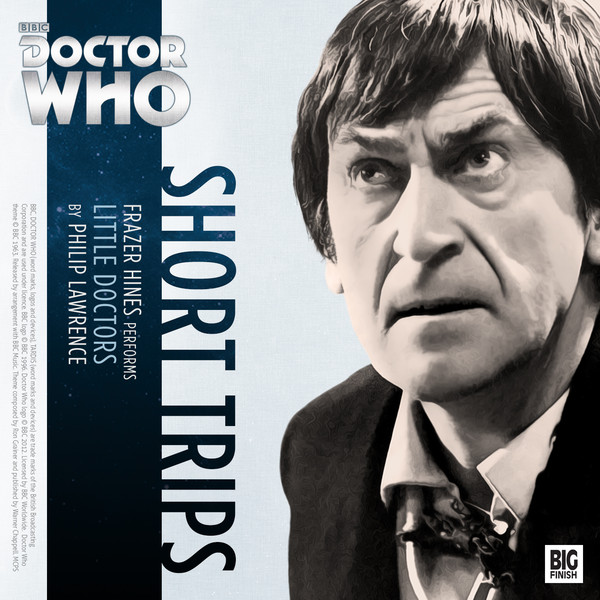
Philip Lawrence is a writer and actor who's probably familiar to readers of this website primarily for scripting the Doctor Who stories Question Marks and Little Doctors as well as running the ever-popular Action Figure Theatre. His acting career has spanned genres and media, with TV roles in Threesome and ITV Real Crime Dramas. On stage, he's recently starred in Privates on ParadeNot the Droids You're Looking For (which he also wrote) and served as an understudy for the whole Horrible Histories cast over two national tours.


AR: Welcome. Who are you and why are you interrupting my Monday evening?

PL: Hello, my name is Philip Lawrence, I'm a writer, and I thought this was my Monday evening. If you really want ownership I could let you have it - but don't change the name.

Oh, go on then. Ah, Philip Lawrence, I remember now! I suppose you want to talk about Doctor Who then?

I'll talk about anything.

That's lucky! Let's start with the basics. The last time I spoke to you - in an official capacity - for Doctor Who Online at the end of 2011, you cited The Robots of Death as your favourite story. Is that still the case?

Certainly nothing New Who has topped it, but I'd have to say The Web of Fear has certainly not disappointed.

And if pressed, could you pick a favourite Doctor and companion?

Ouch, those thumb screws are a bit tight! I think I'd have to say Colin and Nicola. I think it's a nostalgia thing more than anything else. They were my team when I got into Doctor Who for the last time (that last time has never stopped of course!)

I wouldn't say they had the best stories and their chemistry could have been handled a bit better but I do certainly get a thrill out of seeing the figures on my shelf.

I get the same thing with Chris and Billie (and to an extent Barrowman). I think the love of the team you grew up with is hard-wired into all of us at some level, isn't it?

Well my first were Tom and Louise, but I don't have the same affection for them, weirdly. I adore Hartnell too of course and if I had to pick a single companion to go with him it'd be Sara.

Now, your first Short Trip Little Doctors was released the other day, and a fine story it is too. Can you let us into a little of the development process?

First off, thanks for the great review.


I was emailed by Michael Stevens, the script editor on the new Short Trips series, and asked for some pitches. He'd been given my name by David Richardson and he seemed aware of the AFT stuff I'd done too.

I sent him a handful of ideas and Little Doctors was one that stuck for him and he asked for a synopsis, which I duly delivered.

After he read it, he asked for a few tweaks. I think the original idea was to have the little Doctors generated from some kind of rock but apparently this had already been done in Stephen Baxter's The Wheel of Ice, so he suggested the idea of a supercomputer.

It was also originally set on Earth so for the next draft, I took it far out to the colony, called it Olympos and named the computer Zeus. With hindsight, I could have played more with the Greek analogies.

It just goes to show how hard it is to come up with new ideas for Doctor Who.

I liked the insular nature of the colony, and having a mad supercomputer suppressing the population it was created to aid is a very typical but surprisingly unexplored Doctor Who story. In fact, it's surprising that the Troughton era didn't really have an antagonist of that nature.

True. It would have been easy to produce such a villain. All you need is a voice. I guess The Mind Robber comes close.

Yes, that's probably the closest. Were there any other major changes across the writing of this?

I had been told originally that it would be read by Wendy Padbury. That's why it's more of a Zoe story. Jamie is very much sidelined. If I'd known it would be read by Frazer, I'd have addressed that or written a Jamie-centric episode.

As it happens a lot of the Zoe character stuff was watered down between drafts. In my head, as well as trying to be a comedy (Doctor Who does Gremlins) I wanted to show some progression in Zoe as she's forced to overcome her own reliance on logic to 'teach' Zeus. I'm not sure how much of that comes across in the final piece.

Yes, I liked the conscious references from Zoe speaking out against thinking totally logically. It's a trait that suddenly changes in her across Series 6, so it's nice to have that gap plugged, thanks!

It's there also in the fact that her heart skips a beat when she thinks of the TARDIS but she doesn't realise why until the end of the story. She learns along with Zeus.

Yes, these were all things I thought were very clever, and suited her down to the ground. It must have been thrilling to get the email inviting you to pitch?

Yeah absolutely. It's always lovely to get work (obviously) but it's also a bit nerve-wracking pitching ideas and trying to come up with something that's exciting, new and imaginative but that still fits Doctor Who. Fortunately the replies are always constructive even if some pitches are unsuccessful.


Well that’s certainly encouraging for those considering trying their hand. It might be surprising to some that it took this long for you to return to the official worlds of Doctor Who, after the very well-received Question Marks. I hope the gap to your next venture won't be so big?

I do have another one out this year and one more for (I think) 2016 so I'm not going anywhere just yet.

That's great news. But your writing career do of course span far beyond the realms of Big Finish. Aside from the recent Not The Droids You're Looking For, what else have you been working on?

Nothing that's really out there yet. I have done several plays and some other bits and pieces for radio and theatre but most of my stuff at the moment are spec scripts, trying to build up a body of work to take to agents, producers and script editors.

I'm very lucky that everything I've written so far has been performed in one way or another but it means I don't have anything in the drawer when people ask.

I'm sure that's more desirable than the reverse situation! I've found your ambition to write a substantial amount every day quite inspiring. How tightly have you stuck to it?

With varying degrees of success. Things often get in the way. I do write something every day, and I still always have a notebook on me.

I've just finished the first draft of a screenplay by doing just 25 minutes every day. I think I started it on January 11th. It's a good discipline to try and stick to. It does reap rewards, especially when you're busy.

And I've got lots of other things I want to write this year.

Well let's hope the Philip Lawrence masterpiece isn't too far away then. If you had to choose from writing, directing or acting, which would you do for the rest of your life?

I don't consider myself a director by any means. I've done what some may consider directing, but it's not something I'd actively pursue or consider myself remotely good at.

However I am a bit of a control freak so I'd say writing. Acting is amazing but as versatile as (I think) I am, there are only so many characters I can portray. Writing allows me to be anyone and anything. I think also, though it's just as overcrowded a profession as acting, I think there are more opportunities to be creative and get work.

Absolutely. So would you have any tips for budding writers looking to get their first commission?

Learn to do it. Read books about it, do courses, read blogs. But also learn by DOING IT! Don't wait for the right moment, just get on and learn while doing it.

And be diverse. Don't pour your heart and soul into one life's work. Write loads of things until you find your voice and realise what it is you specifically need to say.

Let other people read your stuff and take feedback and criticism. If you can't take feedback, and act on it you have no chance.

Rewrite. Nothing comes first time. Every line, every word needs to be examined. Is it exactly right?

And finally: plan. Do a synopsis first, work out your story before you write it. And even then, you don't have to sit down and right it out from first line to last. Dip in and out. Start with chapter 10. Skip sections that you're struggling on and come back to them later.

You should be a teacher!

Erm, yes I'm quite passionate about this writing lark. I guess above all, just DO IT. Don't wait for permission.

Excellent, thanks! And it'd be remiss of me to go a whole interview without mentioning the AFT. Are there any plans to relieve its current hiatus?

There is one more story that hasn't been posted and I will get round to it one day. It just isn't a finale, it never was. It ends on a flippin' cliffhanger!

If I'd had time to decide, ‘OK, I'm not doing it any more’, I'd have written a proper send off, wrapping up the story strands that I'd left dangling. Every so often I do try and think of a one-shot story I could do to cap it all off.

At the risk of rubbing salt into any wounds, there are some stories that I'd written that I never got round to making like a second McGann series and a War Doctor trilogy. I am considering a short story if the FB group gets 500 likes (we're about 6 away I think) [link] but it's all a question of priorities and timing.

I guess the short answer is 'no, not at the moment'. But you know me, I never like to say never.

Fair enough. I think when it comes down to it, we'd all rather you got something on screen or stage than an action figure comic. One final question: if you had a one-way trip in the TARDIS anywhere, where would you go?

Oooh good question! I think last time I was asked this I said back to the '70s to save the missing Doctor Who episodes. Since it's a one-way trip I guess I'd head to a simpler time. I always have had a fondness for Roman times. I'd stock up on modern medicines before heading off though!

Plug plug plug...

Plug! I guess it'd be my most recent project, for Lost Theatre's 5 Minute Festival. Not The Droids You're Looking For is a five minute play about life, friendship and science fiction. It was a great piece to work on, both as actor and writer. I'm very proud of it and lots of people have told me they relate to it. Which is nice. [watch it below]


Phil, thank you very much for your time, as always.


You can visit Philip's official website here, his Casting Call Pro profile here, or the Action Figure Theatre here.

TV: Cucumber/Banana/Tofu iii


reviews by Tom Newsom (Twitter | Flickr | Blog)


You’d be forgiven for thinking Henry, the main character in Cucumber, had been sidelined in this week’s third episode. But the writing is clever enough to keep with the same themes that encompass the series - a yearning for lost youth, particularly - and run with them whilst focusing on other characters. In this case, the ultra handsome Freddie. For those watching both, it doesn’t feel like a Banana storyline; it’s messier than that.

But more on that later, first: Henry and Lance. After last week’s post-breakup breakup, there’s some fun scenes of revenge, but also some subtle warmth between them in moments of peace. To last out a relationship like that for nine years, there must be common ground, even when the characters seem distinct and their plotlines vary - Henry moping, Lance playing with fire. The episode is dedicated to the younger folk - Henry’s nephew gets an interesting role in this; he’s a very modern character, painted in broad strokes here. But this feeds into Henry’s reawakening, as he begins to address some of his problems. (Of course, addressing them through the medium of Crossroads and Katy Perry, though that makes it more poignant)

Freddie’s plot then - it’s a good one. Layered, shades of grey, for the most part more tragedy than comedy. When he encounters his old friend - friends - we’re immediately wary, but the story is handled in such a way that it doesn’t quite end up how you thought it would. It walks a fine line between viewpoints, delving right into Freddie’s character in how he handles the situation, even sometimes being quite provocative, but it never feels (intentionally) issue-led. Perhaps that’s because it’s grounded in what the characters feel, even if they are wrong, rather than what the traditional narrative might be. Cucumber is rarely traditional, happily, or it wouldn’t be as much fun to watch.

And also, in this third episode, there’s the first proper sex scene we’ve had - you can’t miss it. In the first two episodes, and before in this one, it’s been off-camera, behind closed doors (and wobbly walls), and mainly used as a joke, often a dark one. Here its right at the heart of the drama, played as a power struggle, though it’s still taken seriously. Bold for the timeslot possibly, but it’s the sort of scene that you could only have in a drama like this. The comedy here is as top as it has been, but this week the ambiguities live on in your mind too. Hats off to the writing, directing and acting in particular.


Sue Perkins was one of the most prominently-publicised writers when Banana was announced, and perhaps the prospect of an episode from her - a one-off, potentially her view of gay life - was building this up too much.

But happily, as a short slice of drama, it delivers. It’s a love story: two girls get together, move in, stuff happens. The scenes are brisk, the details slight, but it feels real.

One of its biggest achievements, notable by their absence, is the complete lack of clichés - in the relationship, in the drama, even in the plot in these things. Before the episode aired I saw an interview with her for the series, and she ponders that what she might take for granted as a stereotypical behaviour for lesbians might not be the case, and vice versa. Perhaps she needn’t have worried about trying to portray the ‘everywomen’ - flawed-character-heavyCucumber has been chided by some viewers for not being that, but that’s drama. The relationship is stripped back to just two individual and distinctive young women, whose problems have nothing to do with them being gay, but thankfully the writer has included just enough detail to make the story her own - a cheeky game in the supermarket stands out, as do the lively, clever opening scenes.

And then there’s the story between Sian, one of the two girls, and her mother, who’s also gay. Their relationship and her upbringing feels very new and fresh and very well handled. Actually it’s probably a stronger, more human storyline than the lesbian romance. But even that is treated with more depth and feeling than you’d normally expect. It’s really good.


And to Tofu - which proves this week it’s not going to be a one-trick pony as it’s not about sex. No, really - it’s about people who choose not to have sex, in a documentary that’s otherwise about people doing it. 

There’s a smaller range of interviewees on this subject, so we get a much better picture of them - some surprisingly young, some older, all well chosen and eloquent and characterful (and all female, which perhaps raises another question about the issue, along with the few raised in this episode). 

The ‘sketch’ in the middle is lovely and quite mad, in a different way this week.


many thanks - and a very happy birthday - to
Tom Newsom (Twitter | Flickr | Blog)

06 February 2015

TV: Banana iii


Banana is a curious beast. It consistently produces excellent drama that's (so far) always along the same lines, only with a different spin that makes you see events in a totally different light each time. 

This week's episode concerns Sian, who works in a shoe shop, and Violet, one of her customers. It opens with an endearing sequence where the latter returns to the former's shop six times on the false pretence that she wants to exchange her shoes. This of course leads to a full-blown relationship, and writer Sue Perkins handles the character sensitively, treating them no different to a straight couple, which in my view is exactly right.

Of note in this episode are the ways attitudes to homosexuality are addressed. Although we don't see any actual abuse, it's much discussed, and every possible perspective on the matter is presented through our three lead characters - Sian's mum Vanessa plays a key role in this too. No real conclusion is reached other than everyone has a different experience of bullying and abuse in some form or another, and I was glad to see issues presented with a grounded sense of humour. In the words of Vanessa, brought to life wonderfully by Lynn Hunter, there are some real pricks out there, and you need to be able to see the good things in life.

And Banana is certainly one of them. This is more like the 'conventional' romance we were expecting last week, but like real life, there's nothing conventional about it at all. Sian falls into a heady romance, but that's not what this episode is about. The real core of the story is in her growing up and learning to find a lust for things - for life. If it's possible for a series to become predictably unpredictable, then this certainly is. Although that's less true of this episode - the twists were often signposted - the emphasis really isn't on the plot. Like all creator Russell T Davies' best work, it's about character. And the two characters at the heart of this really sing.

Georgia Henshaw (Sian) and Hannah John-Kamen (Violet) are perfectly cast in these two roles, and nowhere is this shown better than in Lewis Arnold's mesmeric shots of them just lying on a bed, holding hands. Love in a picture. There's plenty else of note though, and it seems either Davies guided Perkins in the development of her script or she's learning from the master, as we get another satisfying pay-off. This time it comes twice, in the form of a supermarket game. The first time, is in said location, but the second comes right at the close of play, and wraps the whole story up nicely. Once again, we get a winning note of ecstasy to end on, despite everything. 

I love the message this series is promoting, and the way it goes about things. Long may it continue.


TV: Banana i


The way Banana and Cucumber have been designed to marry up is very clever, surely that's something that's only to be expected from the raft of talent invested in them. Banana - a simultaneous spin-off - focuses for now around Dean, who works for HC Clements with Henry Best, the star of parent show Cucumber.

Whilst I can't say that I enjoyed this episode as much as the first of Russell T Davies' other new series, I still loved it. The theme of chaos overriding everything is present once again, only this time, it's the chaos personality flaws cause rather can create that's under the microscope. Within the first minute, we're already an emotional wreck following Davies' typically bold introductory style, as we see Dean's newly-acquired lover pass away. The writer has a love of comic strips, perhaps explaining why he is so good at saying so much with so little. The introduction is told entirely through images, not a word spoken, but as Dean's boyfriend breathes his last we're already tearing up. What a writer.

Banana is the best kind of spin-off; it complements and expands upon the main article very well, but one really isn't essential for enjoyment of the other. The cavalcade of catastrophes than consume an average day of Dean's life are cleanly presented here, and Davies takes the interesting tact of making them all his own fault too. It's another stunning opening episode launched with an extraordinary team behind it. Fisayo Akinade is a natural leading man, and when he's onscreen it's nigh-on impossible for your eyes to leave him, making some scenes a little awkward. The continual lack of self-confidence and unintentional shame seep through in the writing and Akinade's acting through what's not said, showcasing talent of the highest degree. Dean's out, but where his family's concerned he's far from proud, and would much rather run away than confront it.

The direction of this, courtesy of Lewis Arnold, is punchy and thoughtful when appropriate. His blend of framing and actor fluidity really helps create a polished finished product, and I fully expect Arnold's career to explode as a result of the exposure he's gaining here. Ben Foster is another name carried over from BBC Wales to Red Productions, and I'm glad. Whilst his score isn't quite as distinctive as Murray Gold's for Cucumber, it's still excellent, with some really nice pieces in there. I hope the soundtrack gets a commercial release - there's at least one guaranteed sale.

All in all, this is another excellent accomplishment and pits Banana as a strong forerunner for my second favourite series of the year so far (guess what's first!). Russell T Davies (supported of course by the undercelebrated Julie Gardner and Nicola Shindler) has burst back onto the scene with two astoundingly good new shows, and re-affirmed my faith in him as one of the best screenwriters of all time (and my favourite of anything, since you didn't ask). Others may accuse me of being biased and believing Davies can't put a foot wrong, but going off the back of this and Cucumber's first episodes, surely there's no room for dispute? 

Stunning.


TV: Cucumber iii


With every episode of Cucumber, my suspicion that this is the closest we'll get to a complete Russell T Davies autobiography is growing. It often feels that Henry is speaking the writer's true innermost thoughts, but the same could be said about other characters too. 

In ordinary series, episode three would probably be about the point they would start to stagnate. You've had the amazing first episode, the second episode that secures your viewers for the whole series, and you'll have some kind of finale you're building towards. Cucumber, though, doesn't follow ordinary TV conventions - in many ways. Real life doesn't happen in a predictable fashion, and Davies mirrors this with the notion that anything could happen at any time a fixture of this and Banana

This episode focuses for the most part around Henry's flatmate and fellow HC Clements employee Freddie Baxter, played with impressive versatility by Freddie Fox. Up to now, we've had Freddie presented to us as a quiet, confident character. In a subversion of expectations typical of Davies, the character is flipped completely on his head when an old teacher comes back into his life. It all starts with a look across a car park, and that single frame, shot so beautifully by David Evans tells an entire story. Before long the pair (the elder of whom is married with two children) are back in each other's arms. 

And that's where the tale twists again. Gregory, the teacher, insists that it's just a one-off. Naturally you expect him to become hooked on Freddie again, as any character of the appropriate persuasion seems to. But Davies is cleverer than that. Even though Freddie undoubtedly gets the most of anyone in this show, he's the one that falls for Gregory. And so begins a relationship that ends in inevitable chaos for the school teacher, with Lance playing a crucial role in the resolution of this episode. Some might say the plots of this episode and last week's Banana are too similar, but I'd disagree even though I do acknowledge there are similarities. 

All this talk of Freddie doesn't mean that Henry's life has been put on hold though. Like real life, certain people's prominence rises and falls in this series. Lance and Gregory are two people who operate in completely different circles, yet come the end of episode three, one's kicking the other in the ribs. That's how Davies cleverly ties his whole series back to Henry. If he and Lance hadn't gone on that fateful date in episode one, these two people probably never would've met. I'm a firm believer that Davies is a master of storytelling, and he tells the most economical of stories, showing us events in miniature before inviting us to apply these across a much greater period and scale. 

It's not just the show's creator who seems to be speaking through these characters though. Henry's nephew Adam is a thinly-veiled reimagination of Benjamin Cook, a journalist who Davies is very familiar with, and the showrunner of accompanying documentary series Tofu. We explore some of the more obscure facets of Davies' personality here, with Adam engaging in the noughties trend of straight boys pretending to be gay whilst miming to pop songs to earn Henry a bit of cash. Whilst we're on the subject, I'm sure Adam being 15 is a reference to it being the same number of years since Queer as Folk, arguably Davies' breakthrough series, and Cucumber's thematic predecessor. 

It's been quite some time since I've heaped praise on Mr Murray Gold for the astounding musical score he affords these series. They're seriously fortunate to have him onboard, as his unique soundtrack (including an array of belts and zips) completes the package. Many are quick to write this off as 'that gay thing', and usually I'd disagree. Cucumber (and Banana) are all about people and relationships. The fact that a lot of those relationships are same-sex doesn't bother me one bit. All that said, this is undoubtedly the gayest episode of the franchise so far, with boys kissing, talking about oral sex, listening to sex and having sex. It's unashamedly, deliberately gay, and I can just imagine Russell at the keyboard, tapping out these scenes, hooting with laughter. And rightly so.

I'd have no issue recommending Cucumber on quality alone, but that recommendation does come with one precautionary piece of advice: don't watch it with your parents.


03 February 2015

TV: Broadchurch 2.5 (Newsom)


review by Tom Newsom (Twitter | Flickr | Blog)

It’s back to Broadchurch in one of the most stylish episodes yet. There’s some very flashy shots this week: reflections in close-ups, high shots of driving, low shots on the beach, pulling focus on someone half a mile away. The most wonderful sunsets, rain and tears and puddles, glowing lights of a local fairground. It’s all gorgeous and feels ever so planned, almost too precise for a show that reportedly goes for the ‘first take’ - after all, that’s how they can film lots of lovely sunsets without the light changing. But then this show has always been this way, a ‘heightened’ atmosphere through a mixture of styles.

For the residents, it’s getting personal. More and more, the trial is pulling their lives inside out again. There are a few heartbreaking stories here as you’d expect, with regulars Jodie Whitaker, Andrew Buchan, Arthur Darvill, Charlotte Rampling (still a star) and Marianne Jean-Baptiste. And I want to raise a problem: even though they are heartbreaking scenes, often these scenes seem lost in the mix with the rest of the plot. Unlike the first series, where we often picked on a different person each week and have the characters react to it, there isn’t a strong focus to any of these episodes. They’re trying to strip the plots across the series, particularly the trial (which doesn’t offer us anything especially momentous this week), but it makes the series drag on if it’s the same stories every time. What it needs is a bit of a shakeup of the formula, and I don’t think we’ve had it yet.

A similar drag is happening in the Sandbrook case. It feels to me like so-called-clue piled upon clue, the standout suspect out of the four changing every advert break. I can’t make much sense of it - but then I said that when watching the last series! But the case is deepening. The ending is very much like The Killing in terms of a last-minute-investigation-twist and that gloomy un-Broadchurch like location. That scene was stripped down (with most of the dialogue sounding like it was added when editing) but perhaps it’s the odd twist we’ve all been searching for.

This episode is perhaps stolen by Ellie Miller yet again. Just like her, we’re ready to go through the clues and just try and solve this damned past case that’s haunting the series. But have the characters - and the show - pushed the format too far?


many thanks to
Tom Newsom (Twitter | Flickr | Blog)

02 February 2015

TV: Banana ii


I really like that Banana and Cucumber are two series that are so inextricably intertwined, but are so dissimilar and disparate. Banana concentrates on one romance per week, whereas Cucumber tells one long, overarching story. I don't have a preference in storytelling style, but both are heart achingly well executed. 

Following her fleeting role in this week's Cucumber, Letitia Wright takes the lead as Scotty. After last week's relatively conventional gay storyline, to ease us into the series, you might expect more of the same here. You'd be completely wrong though. In under a minute, all expectations have gone out the window and you feel bad for even having had them. Love is just love, an emotion you can't help or control, and I am so glad this message is being broadcast so loud and clear.

One theme of Russell's writing I'm beginning to recognise again is pay-off. It features in both of this week's episodes, but is probably more satisfying here. In Cucumber, we're introduced to the Henry Test, and we see it tear Henry and Lance apart again towards the end of the episode. In Banana, the red cap is initially mocked and presented as a device to tell us about one of the worlds Scotty lives in. Come the closing moments though, and you'll be applauding. 

'Love without limits' is the tagline of this trio of series, and nowhere is that reinforced more than in this episode. Letitia Wright is perfectly cast as Scotty, and owns the role. This is saying a lot; many wouldn't be able to. I'd expect to see a lot more of her in future - and I'm glad to be saying that. This episode demands a lot of her, with heartwarming, scary and mellow moments, but she completely lives up to the challenge. Lewis Arnold isn't a director I was aware of before this show, but he's clearly got some talent too, and produces one of the most polished and professional shows in the business. 

Like its parent show, this is the complete package. I can't think of any areas for improvement. This is stunning drama at the highest level and although each episode is perfectly plotted for 30 minutes, you can't help but want more. If it weren't for Cucumber, this would be the best thing on the box right now.